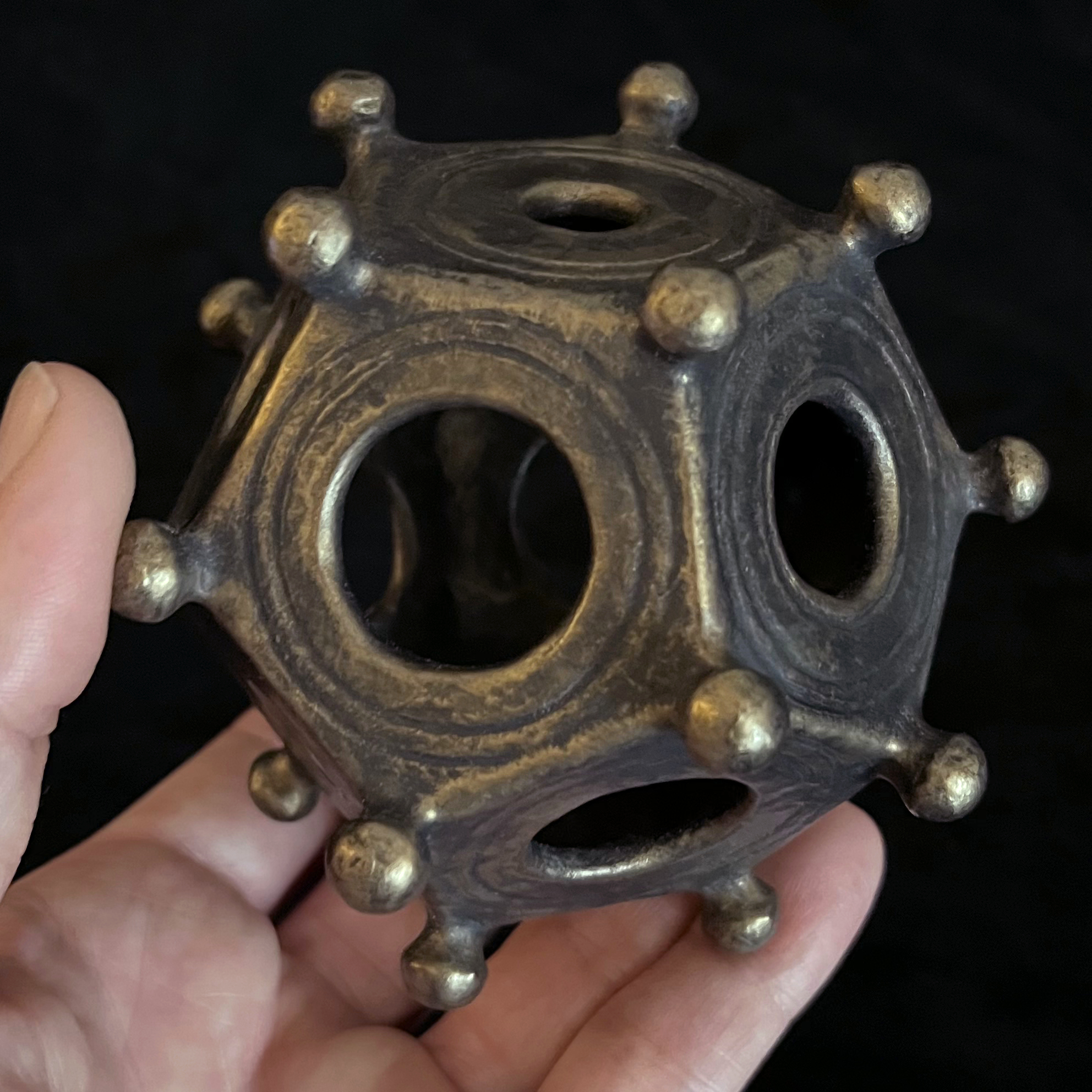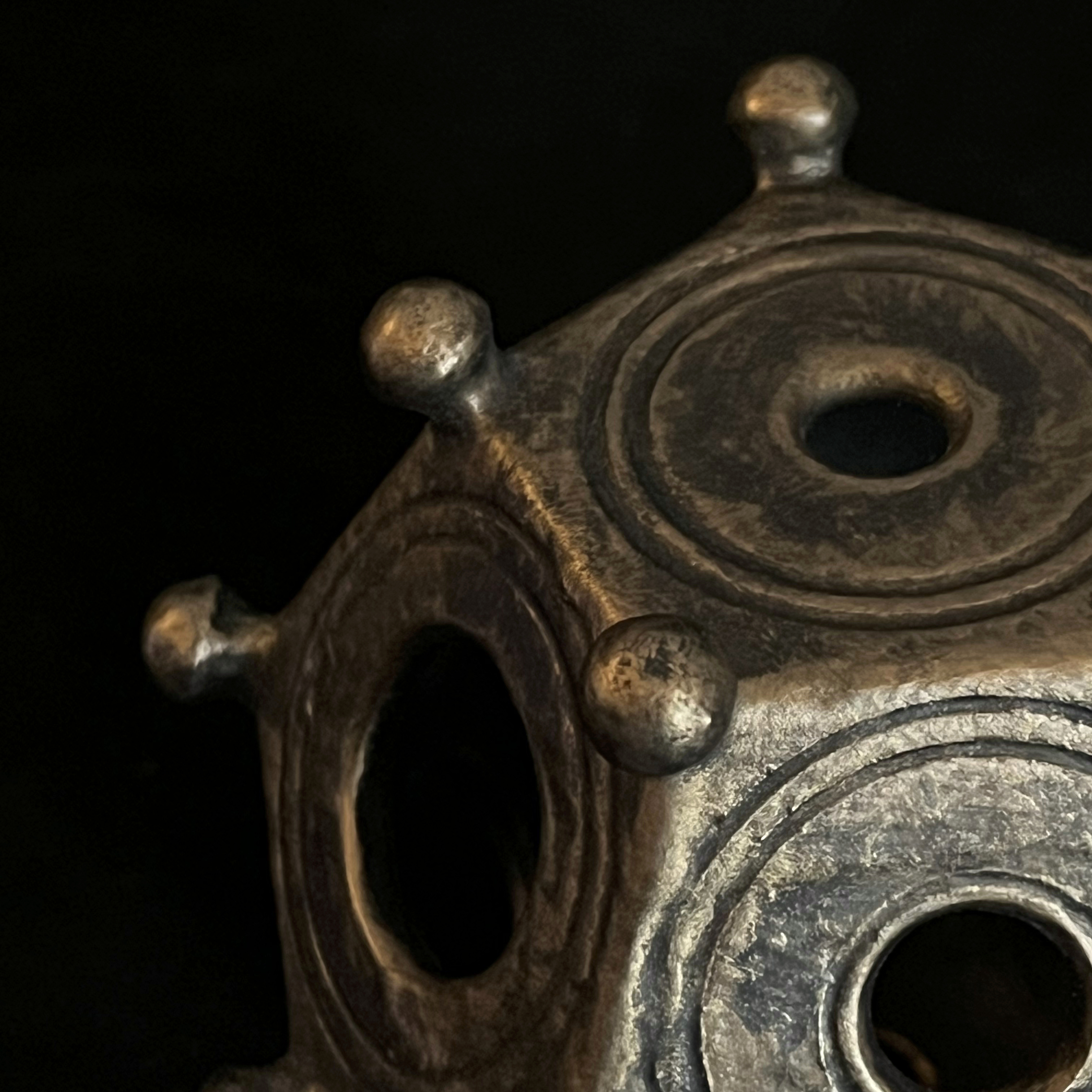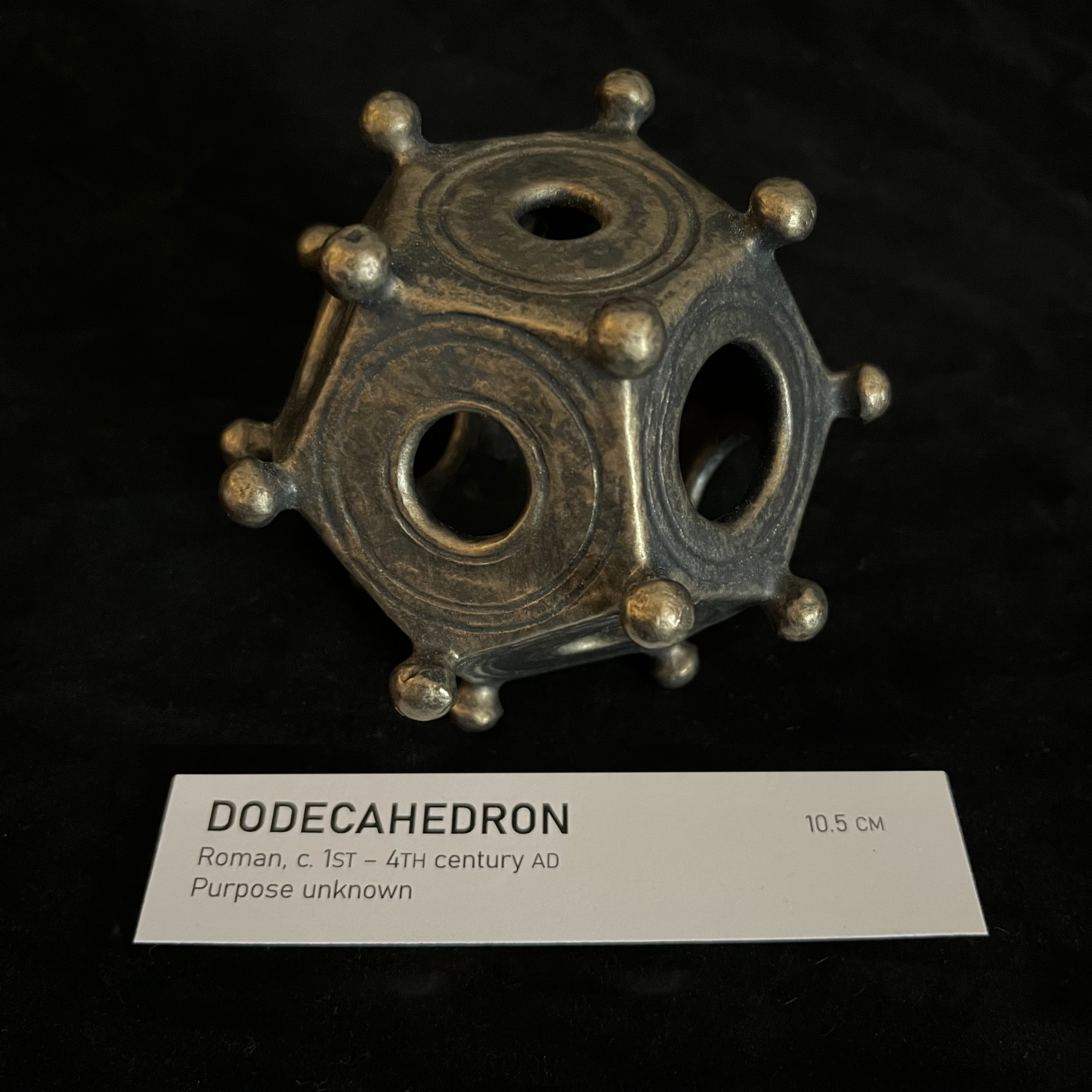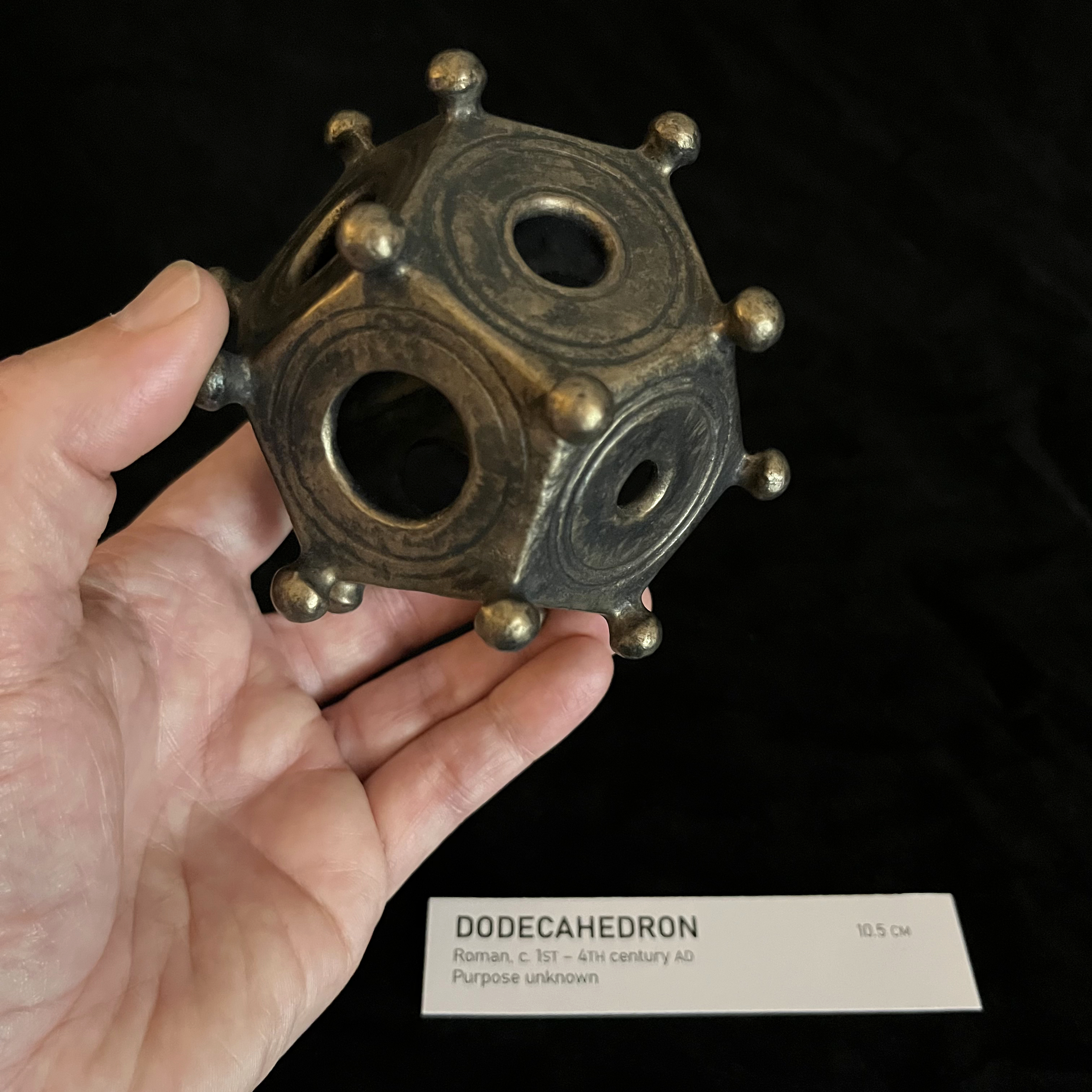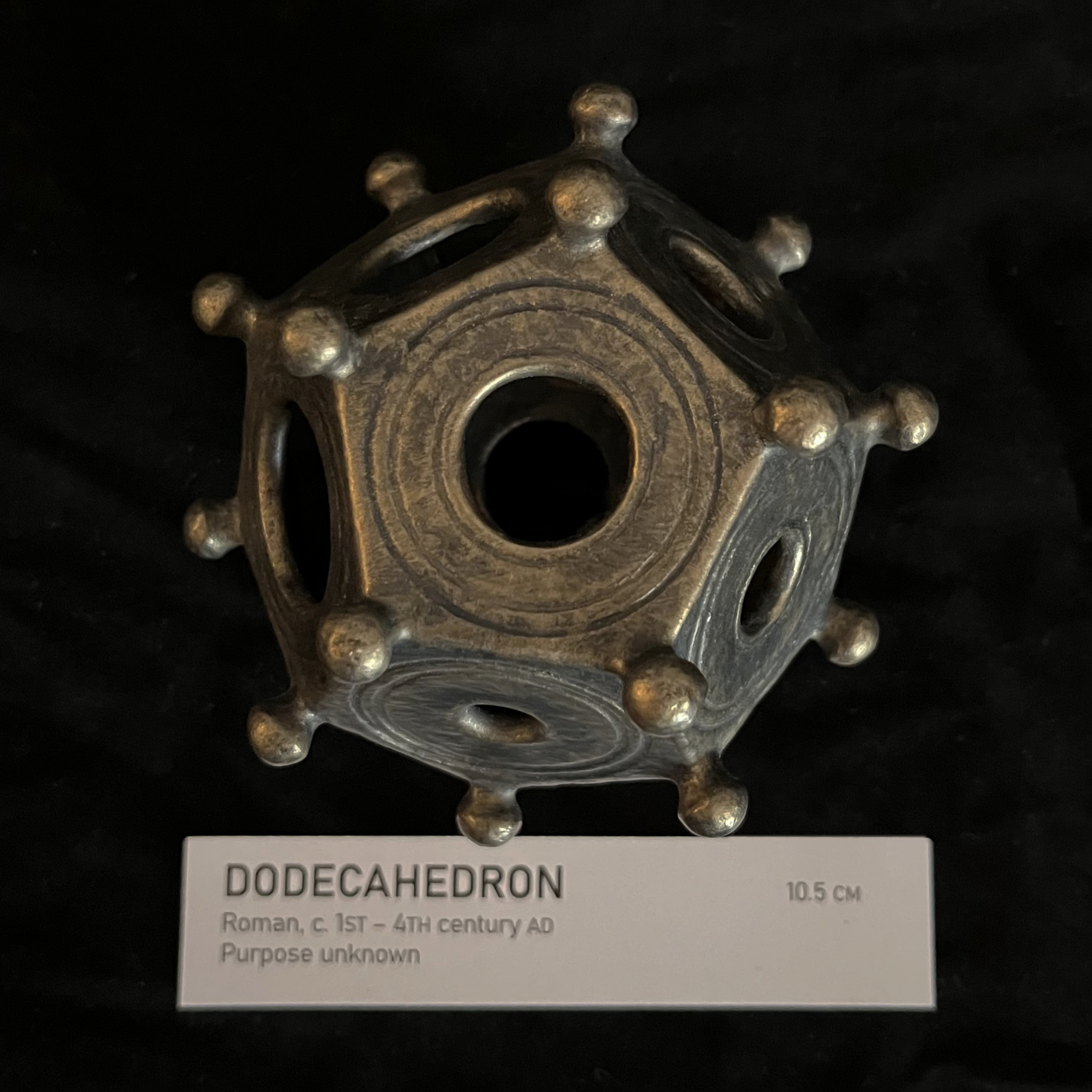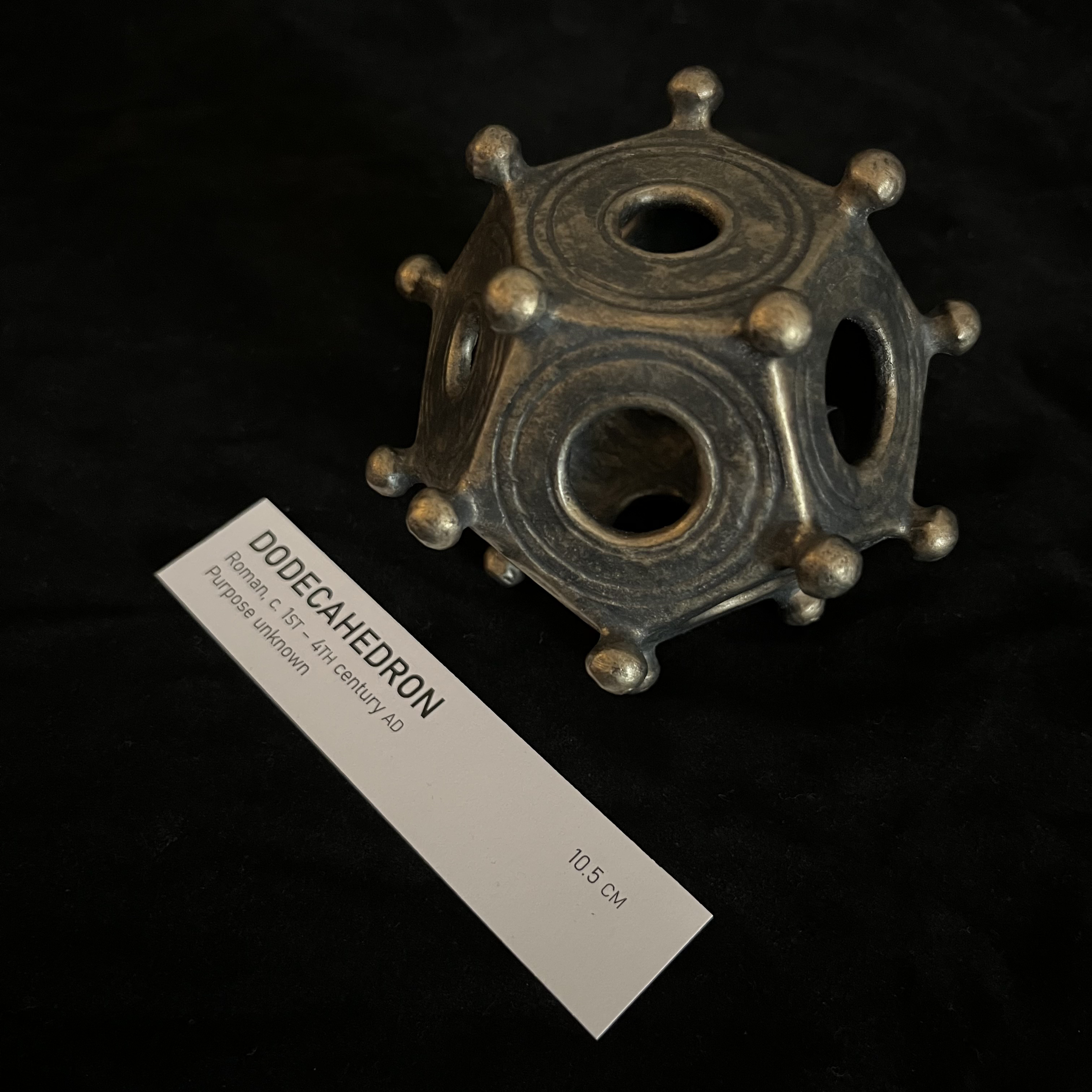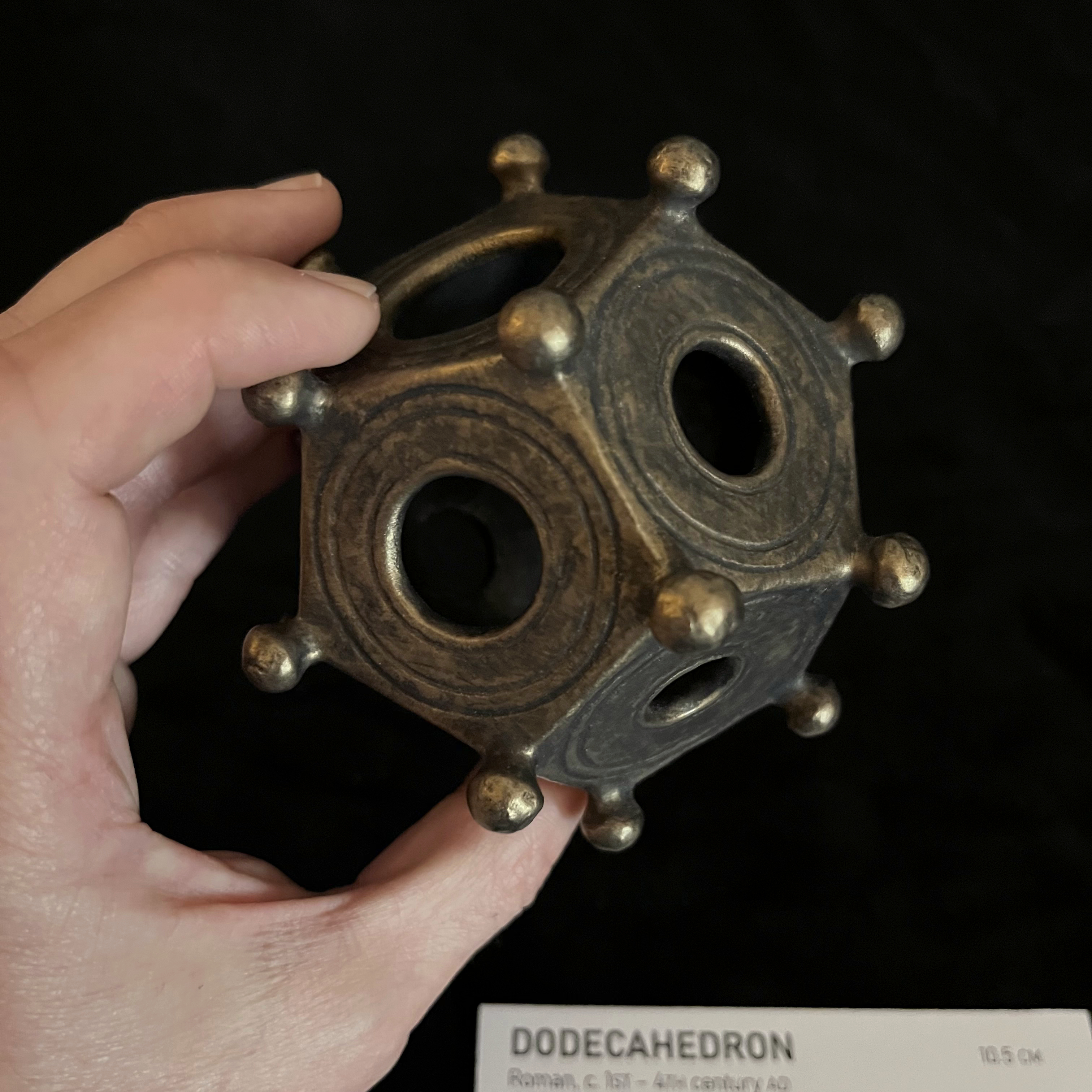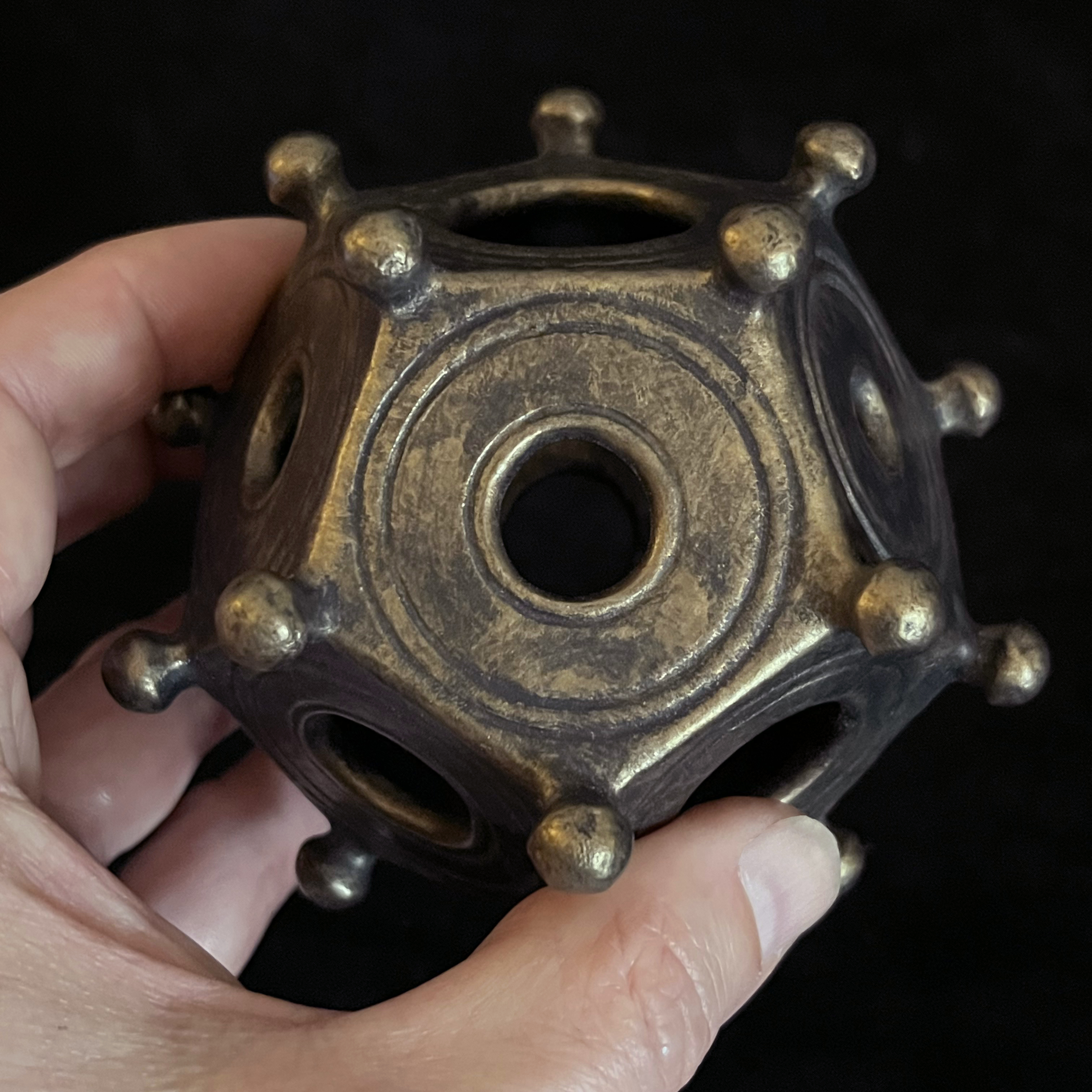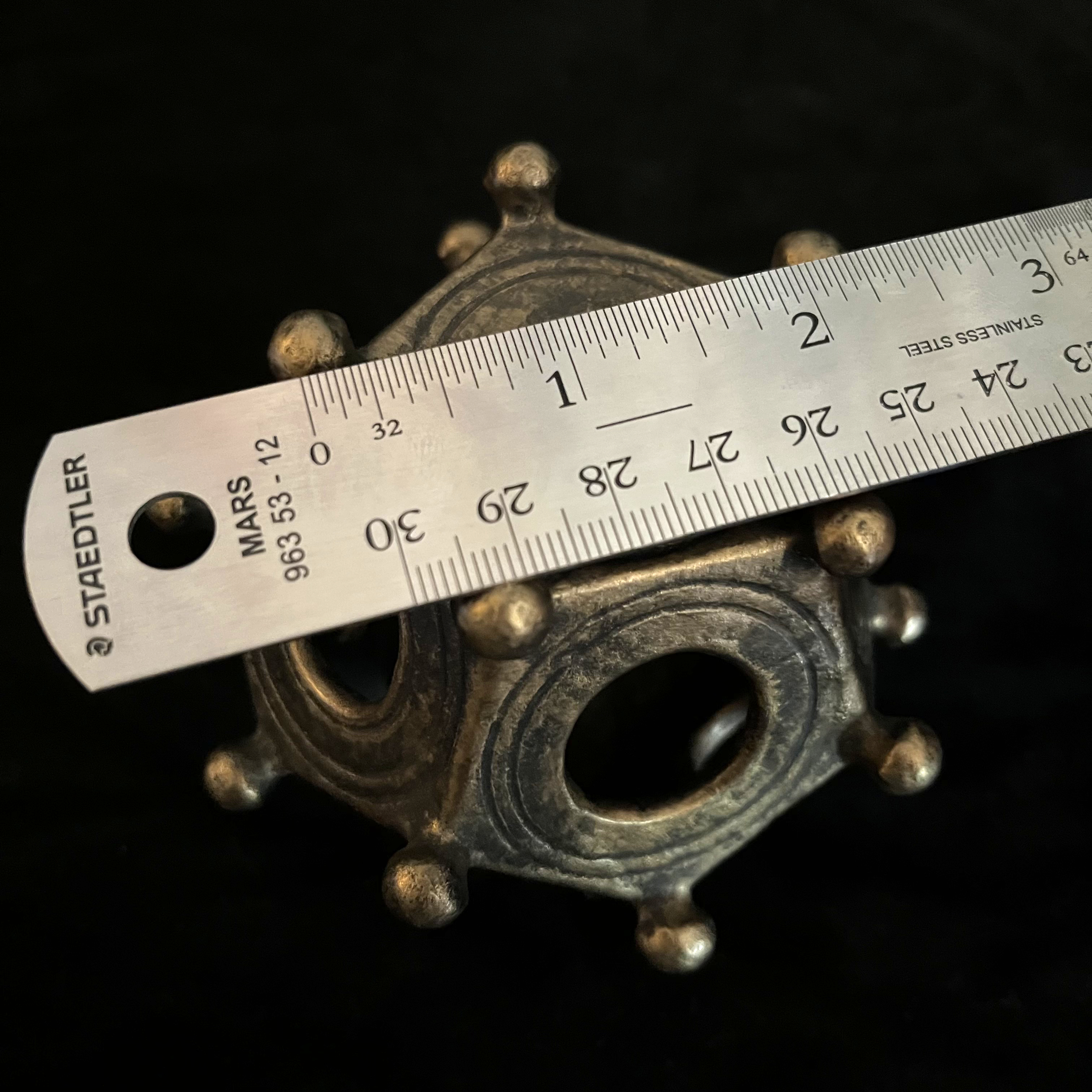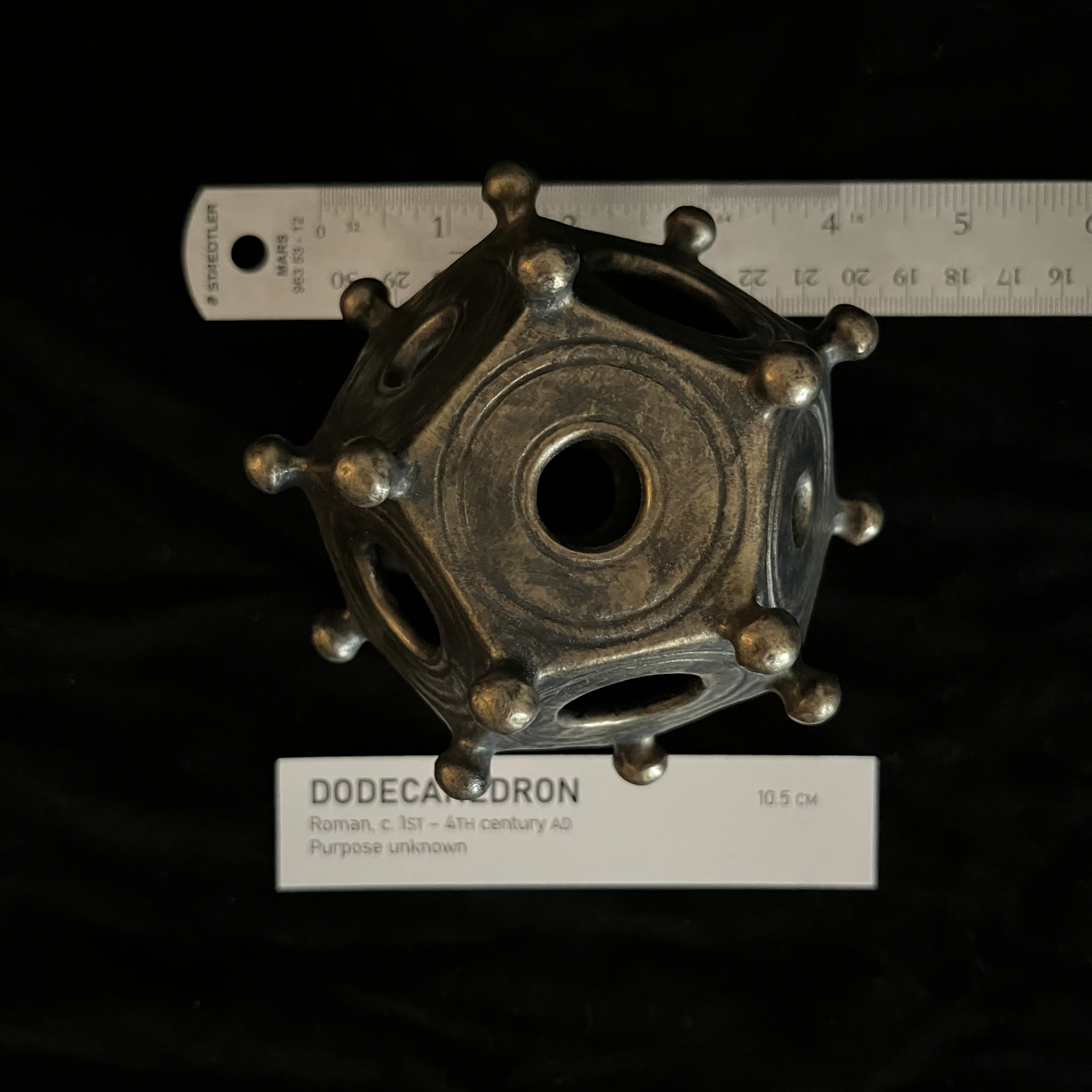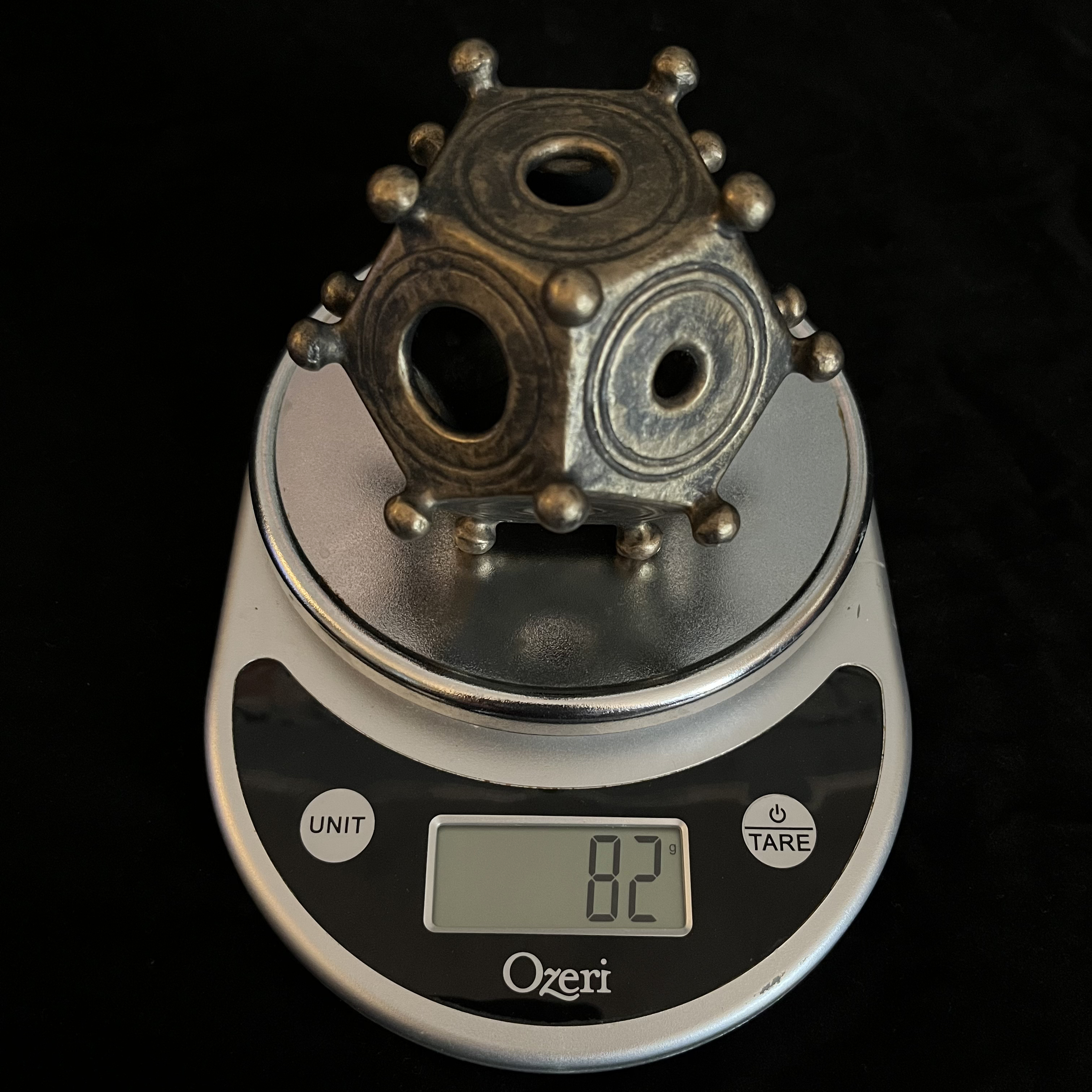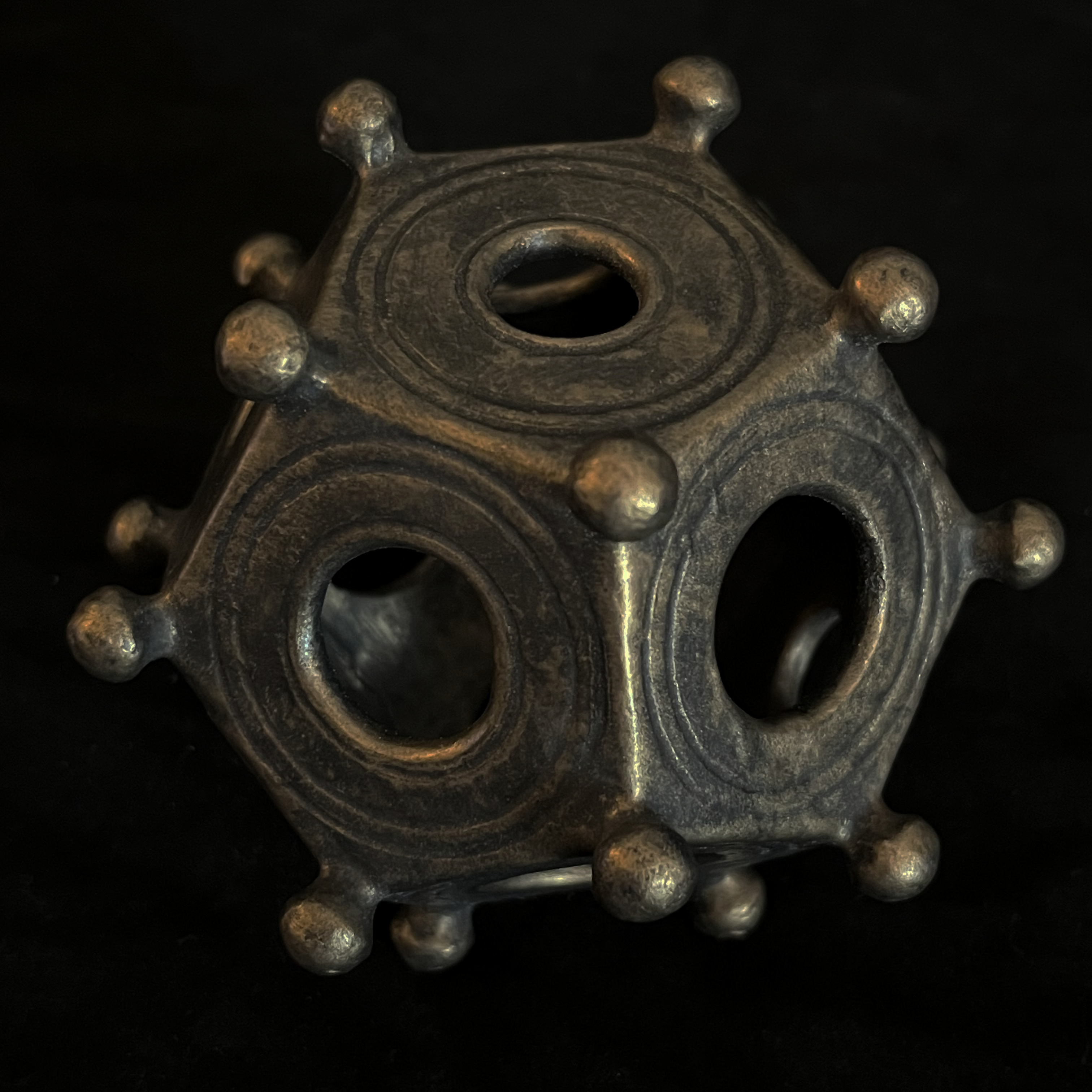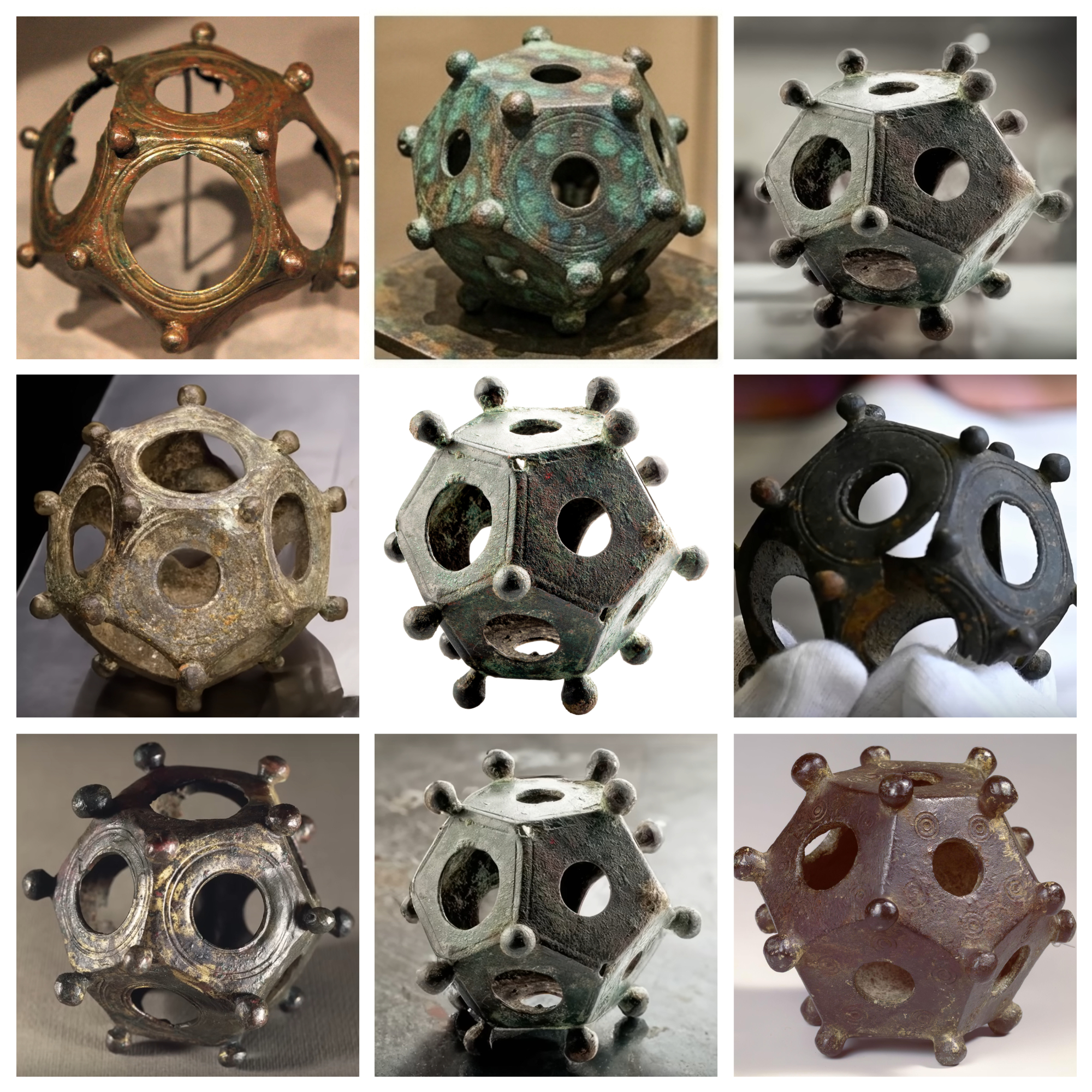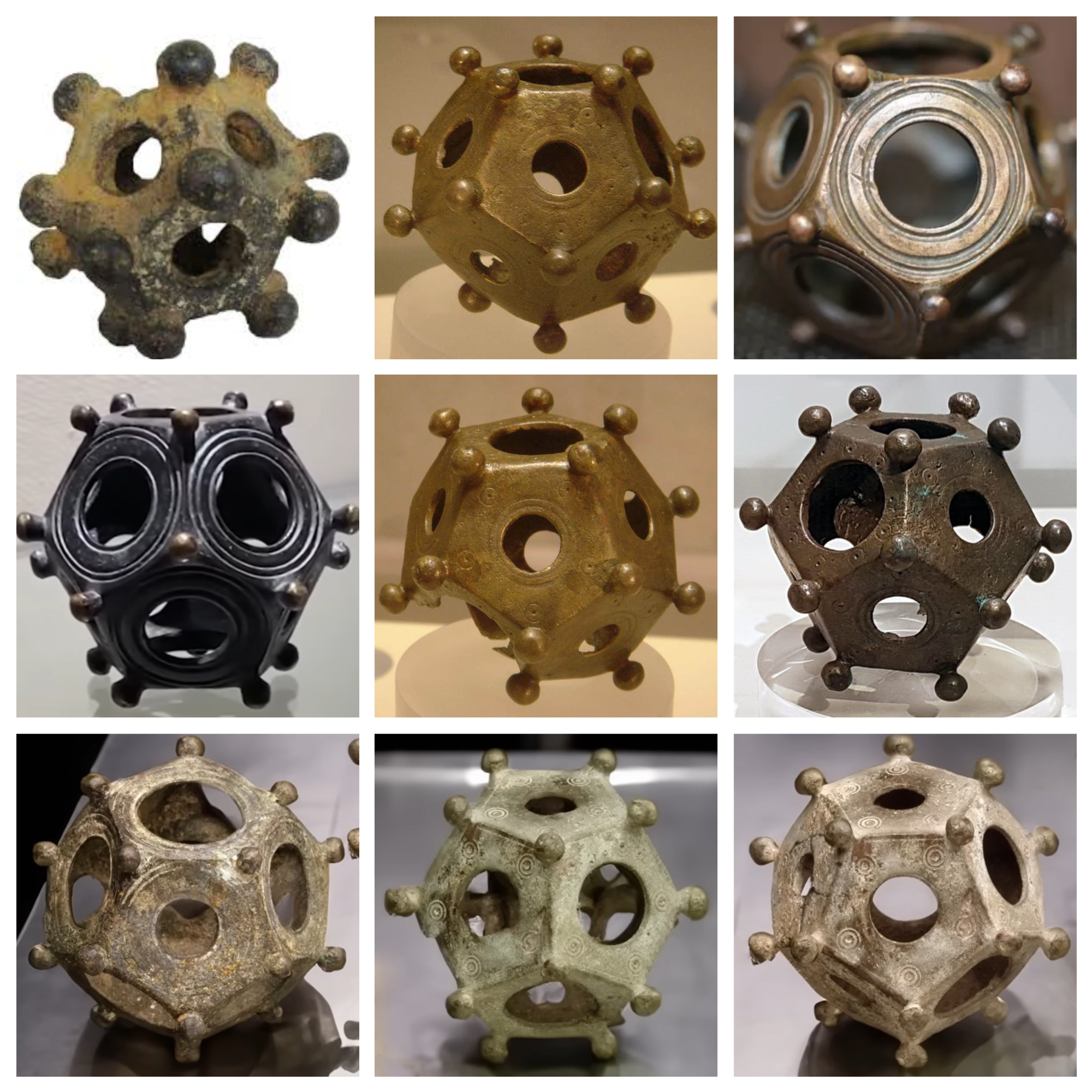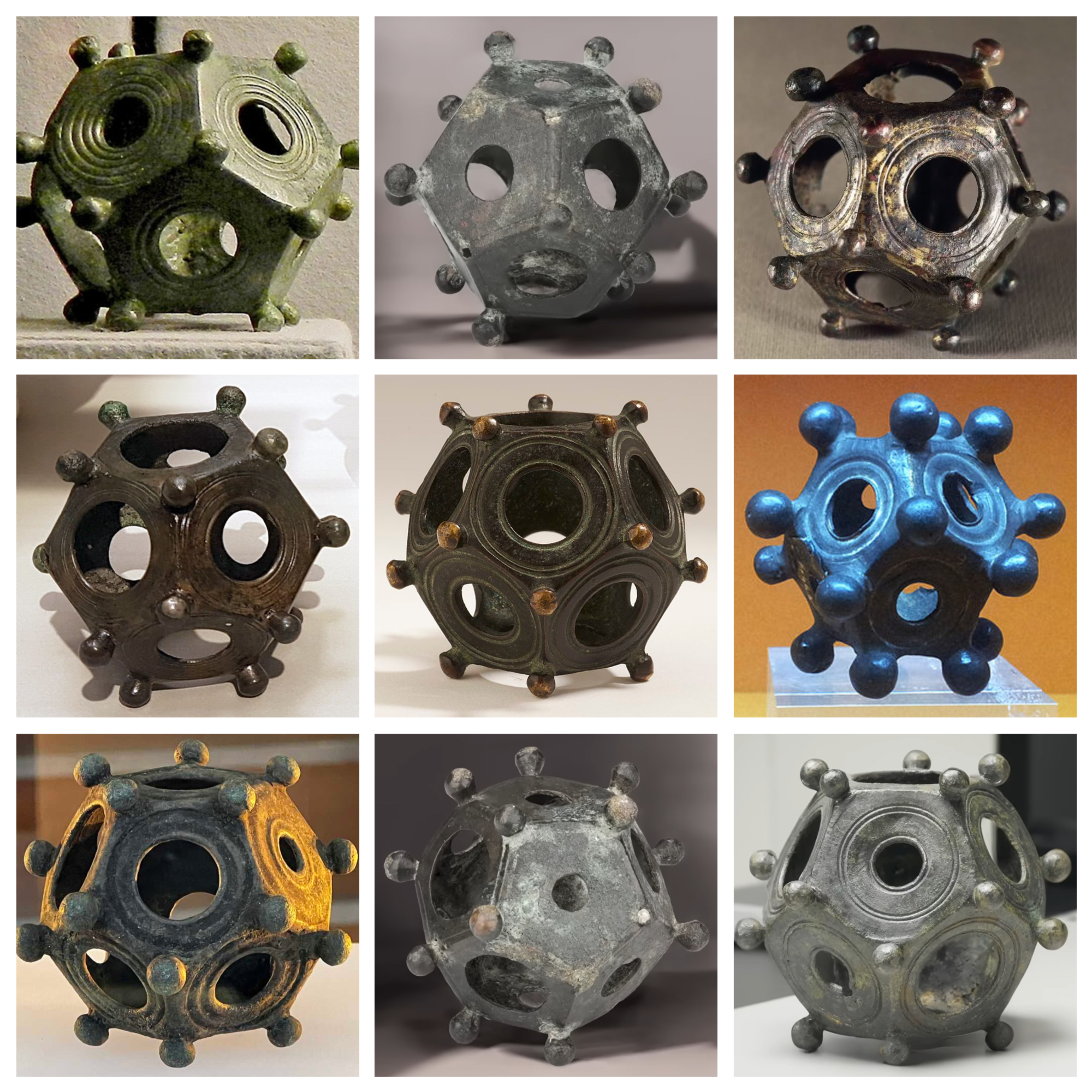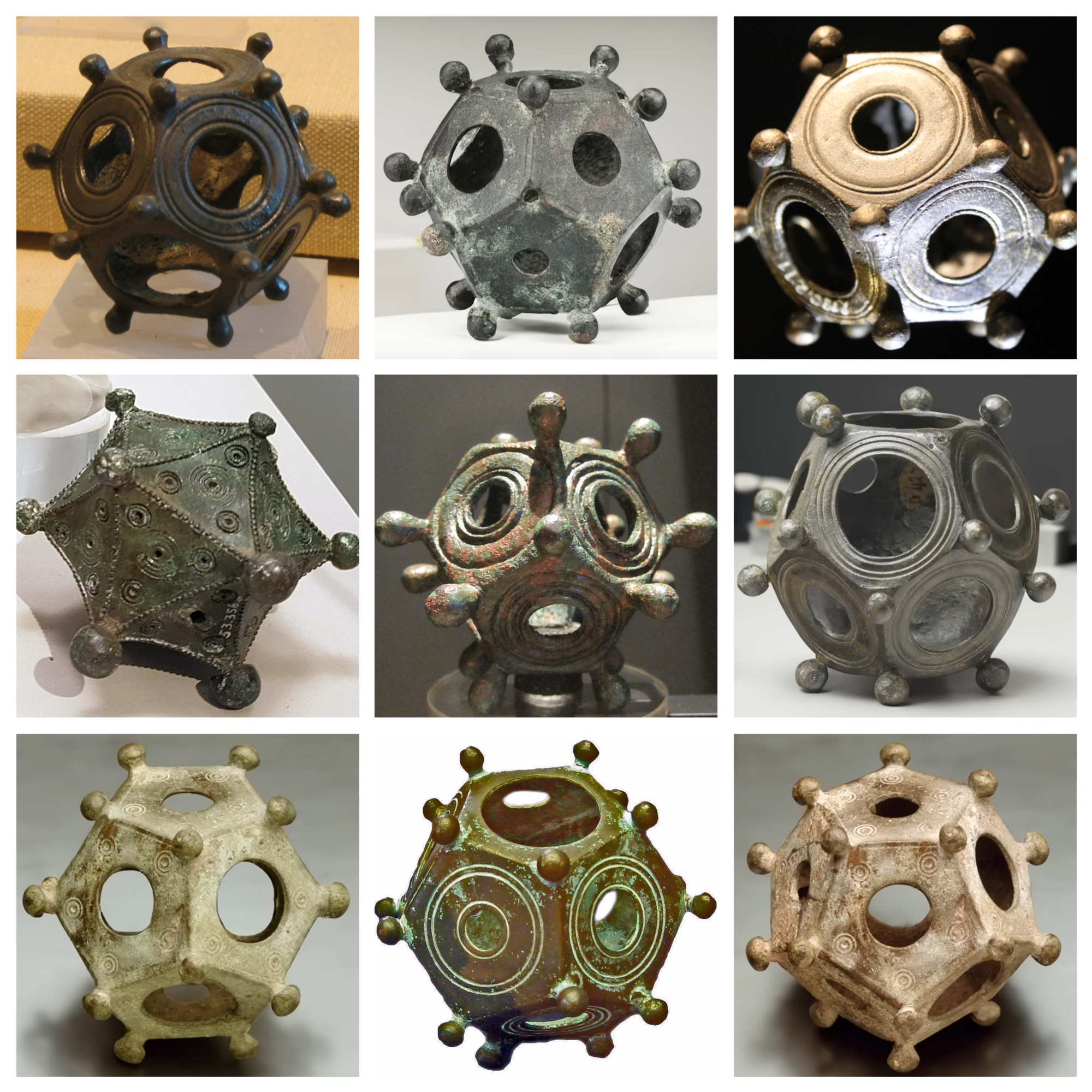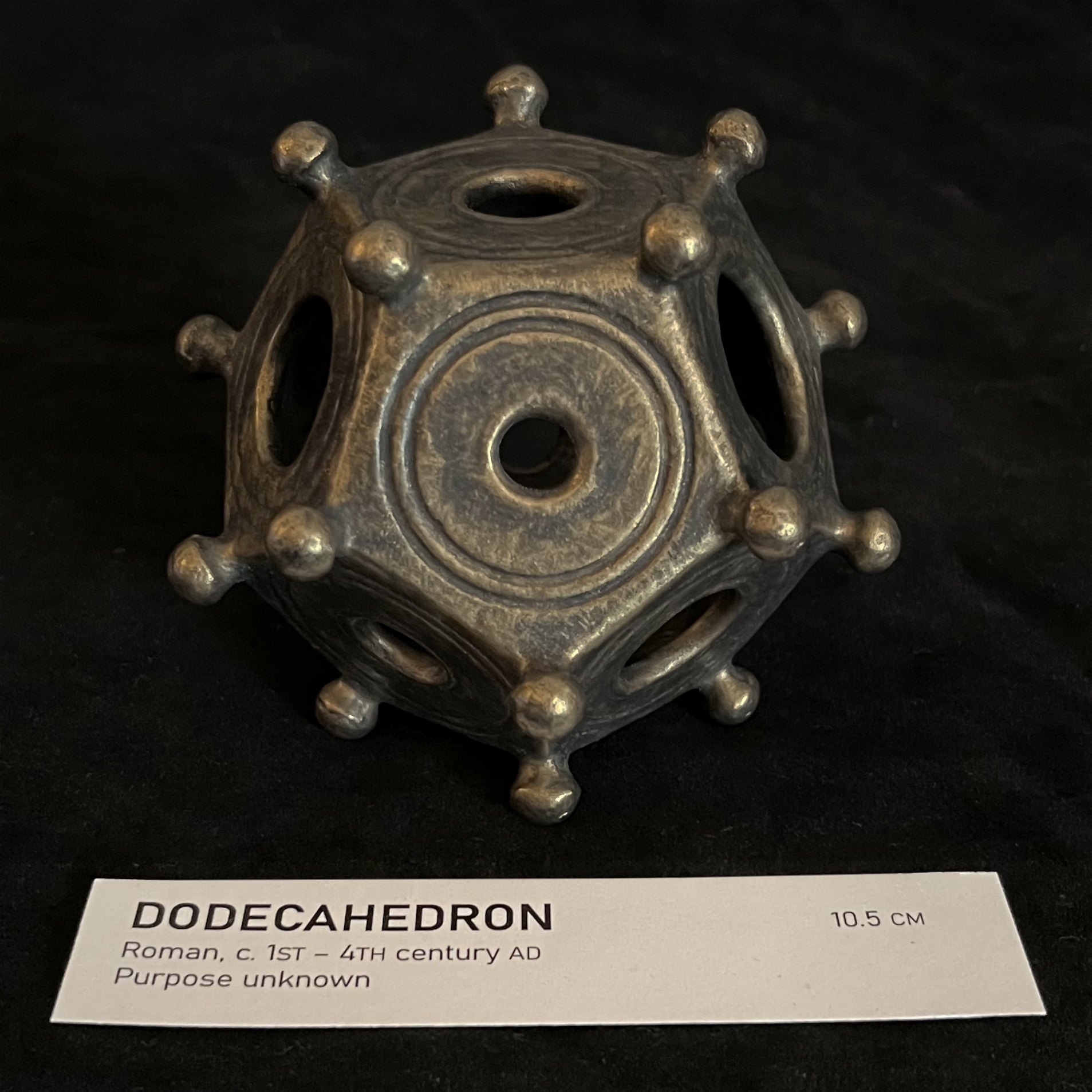
This is a precise replica of a 10.5 cm Roman dodecahedron discovered in northwest Europe, dating to 100 - 400 AD. This 1:1 replica was designed with detail suitable for museum use as a stand-in when the original is removed from display for cleaning.
This appears true to the original even under close scrutiny. I have two of these, and they are virtually identical.
This dodecahedron is 10.5 centimeters from point to point, which makes it among the larger of the 300+ dodecahedra ever discovered. The opposing holes on the 12 co-planar faces are matched precisely to the original. This accuracy makes this model suitable for researchers attempting to ascertain the purpose of the holes, and the significance of their size, proportionality and spacing. Theories include navigation, range-finding, and moon-phase calculations.
The original purpose of the Roman dodecahedron is still unknown. There are no references to it in any literature or records of the time, and archaeologists have proposed only theories over the centuries since the first one was discovered. Some dodecahedra were discovered in bags of coins, suggesting use with the sizing or sorting of money. Some have been discovered with surveying equipment, suggesting use in range-finding or navigation. Yet others have been found covered with wax, suggesting something as mundane as a candle holder. Still others have proposed a knitting tool, a sundial, an occult prop, and even a child's toy. Ultimately, its original use is one of the true remaining mysteries of our time, and there is significant debate in the archaeological community.
This model is sized and scaled precisely, and is the appropriate size where others I have seen are too small and thus functionally useless. If your goal is research or experimentation to determine the original use, this model supports that effort if you cannot gain hands-on access to a museum's original.
For an excellent five-minute video introduction, watch this on YouTube: History Channel Mystery of the Roman Dodecahedron.
The surface incorporates real pulverized bronze, applied and worked by hand, then patinated and sealed to museum-grade standards for surface preservation. The result is visually indistinguishable from aged bronze under close scrutiny, with surface depth and character consistent with surviving historical examples. Unlike archaeological originals which will chip and flake, the patina is intentionally stabilized over a limestone composite polymer that will not shift through further oxidation, meeting the requirements for stable museum display pieces.
By way of background, I design commission pieces for museum and film use, where close scrutiny is required. My most recent design is in the Obama Presidential Museum in Chicago, inside the replica Oval Office.
Made in the USA.