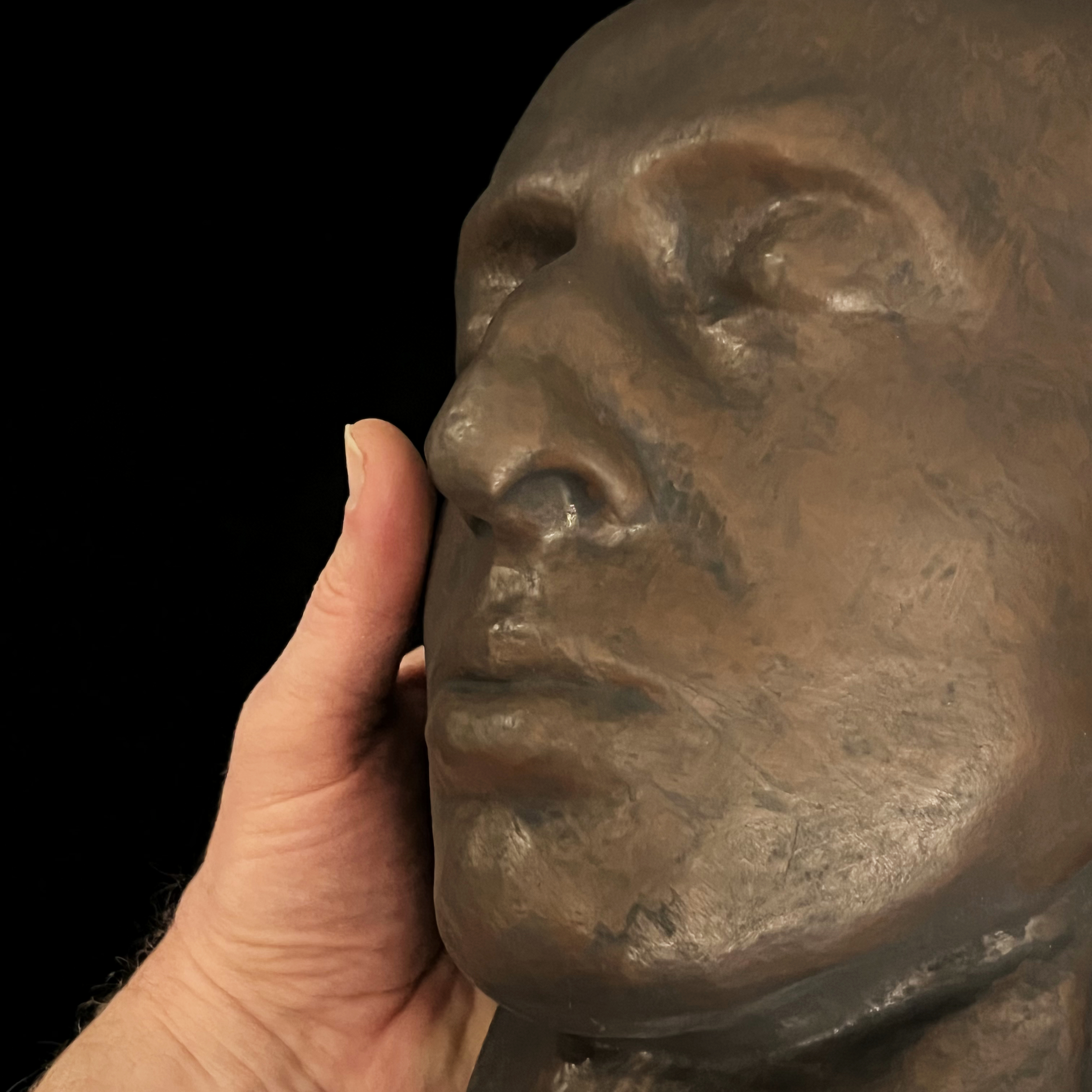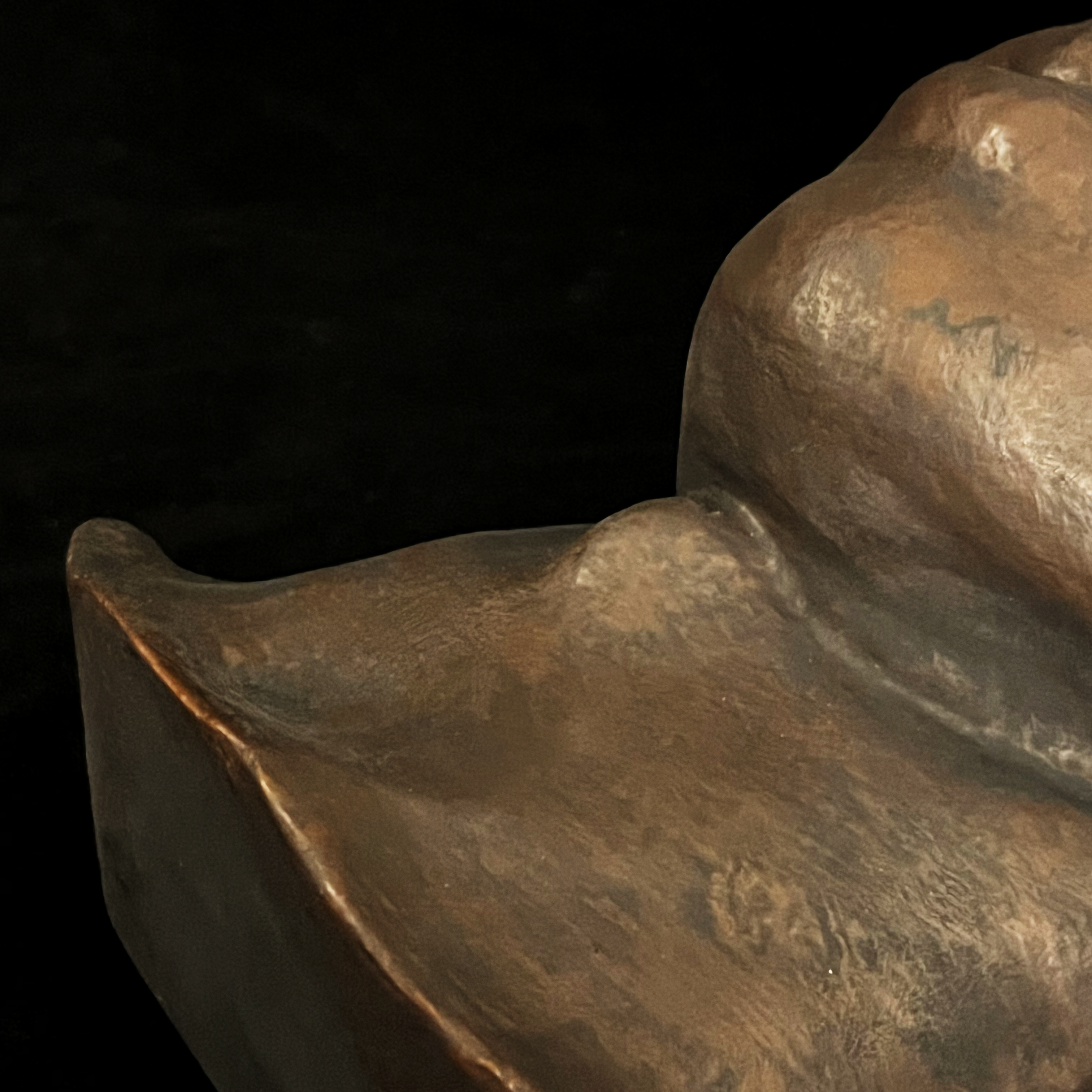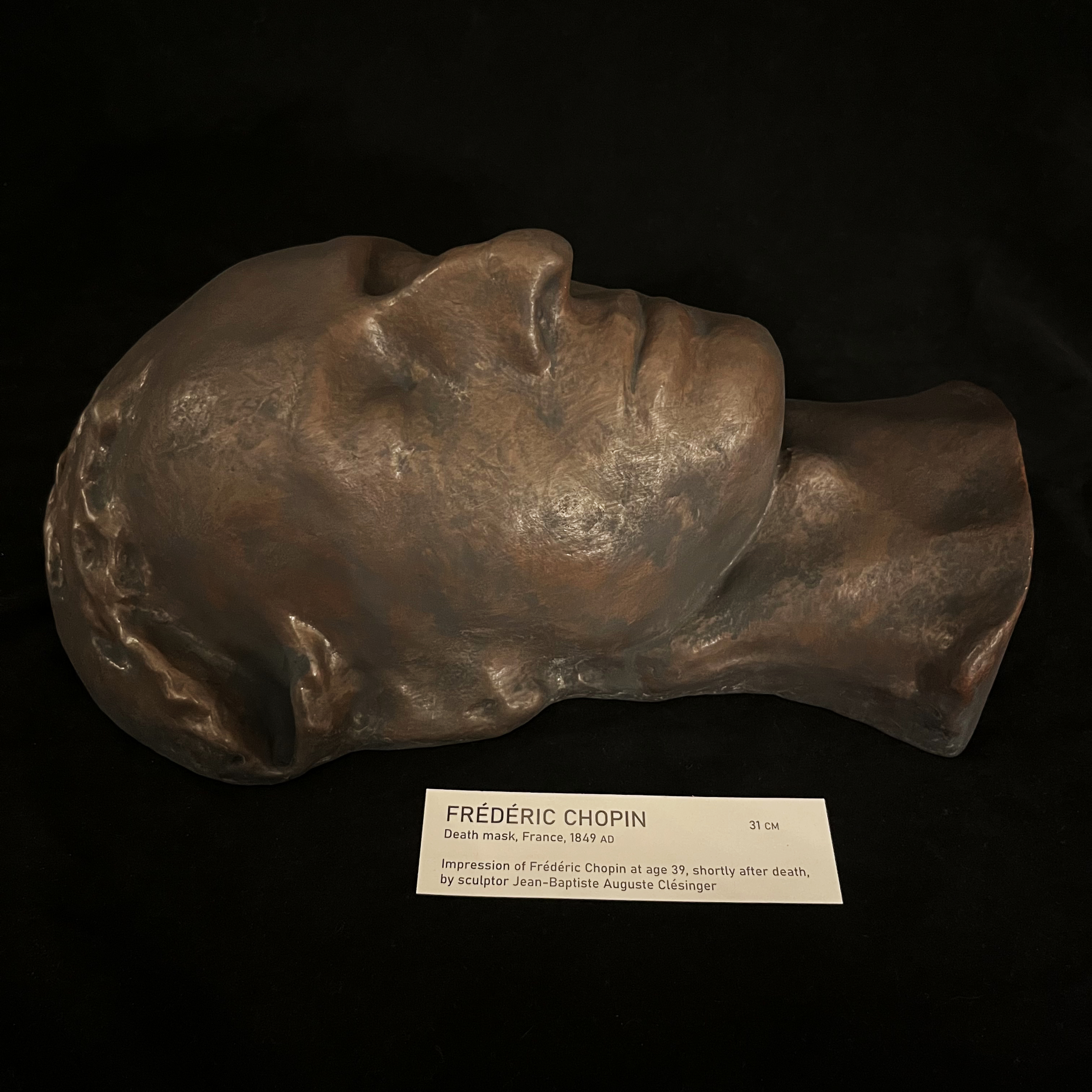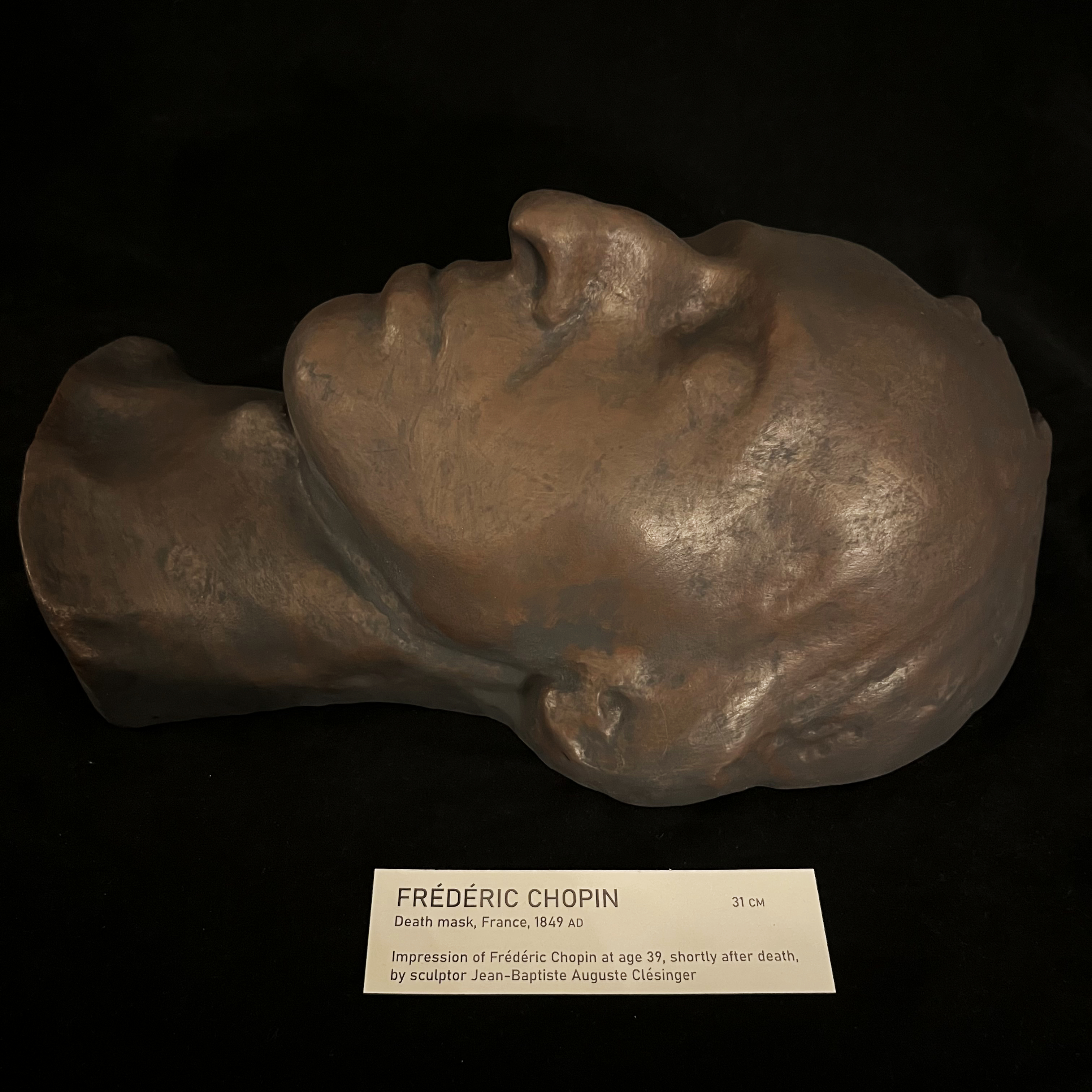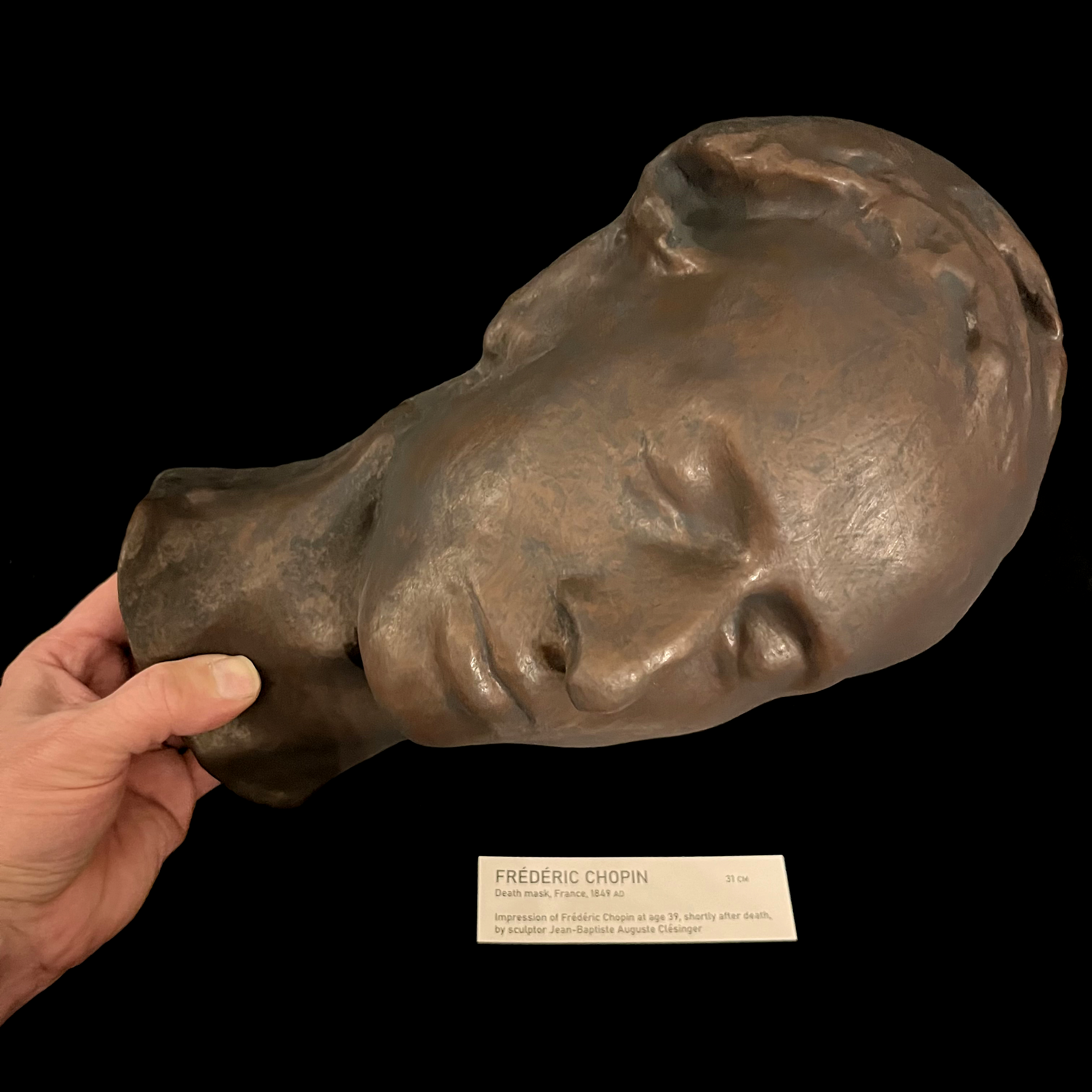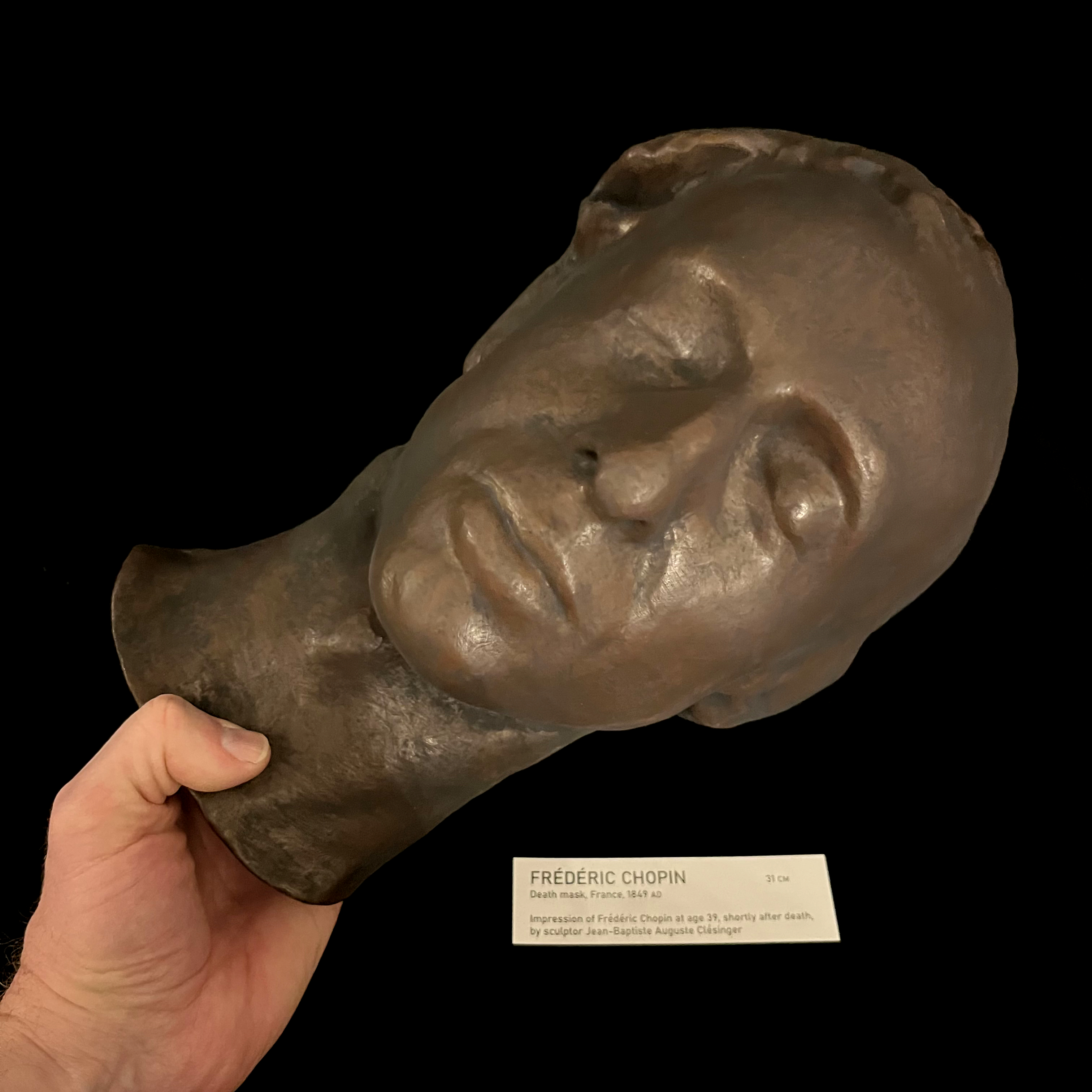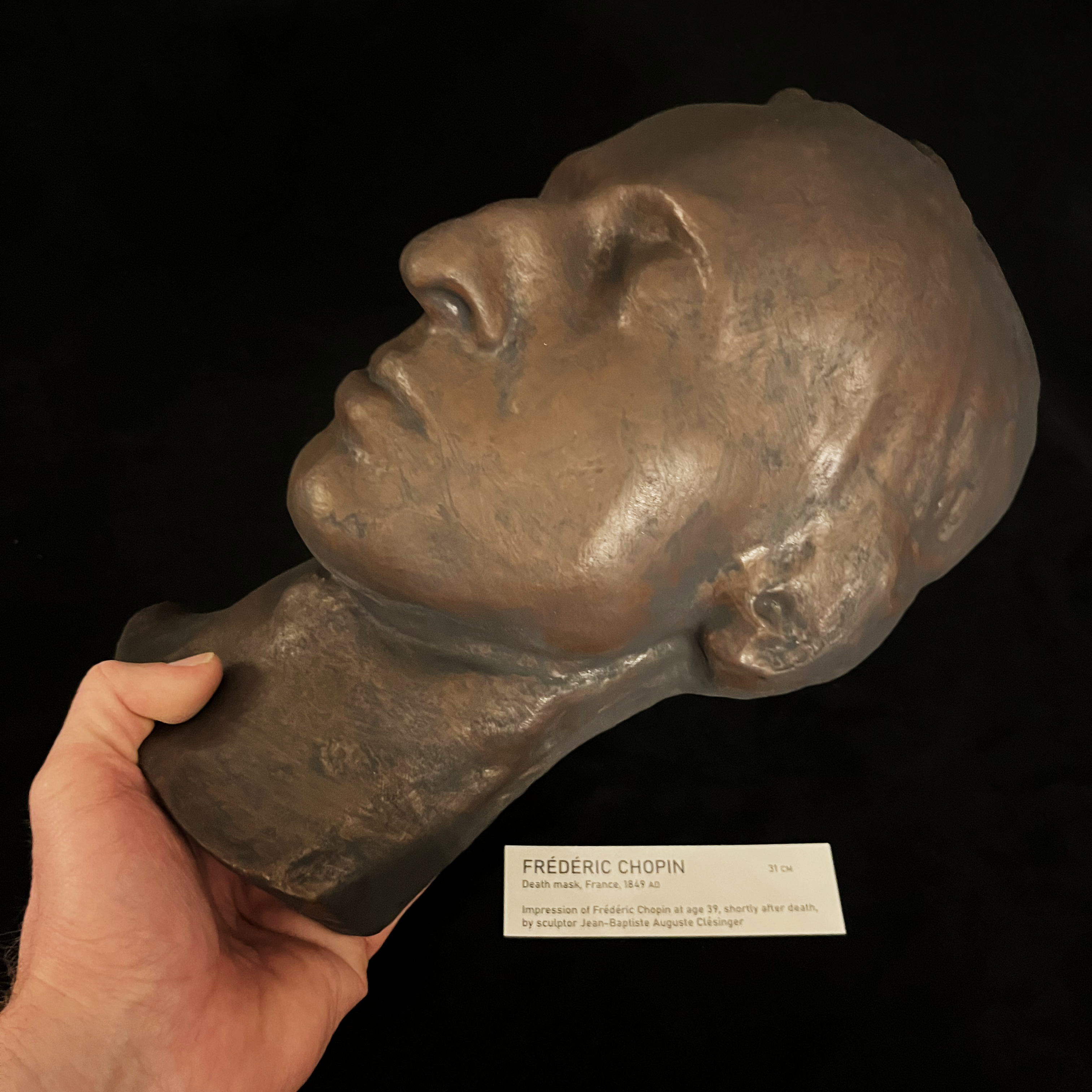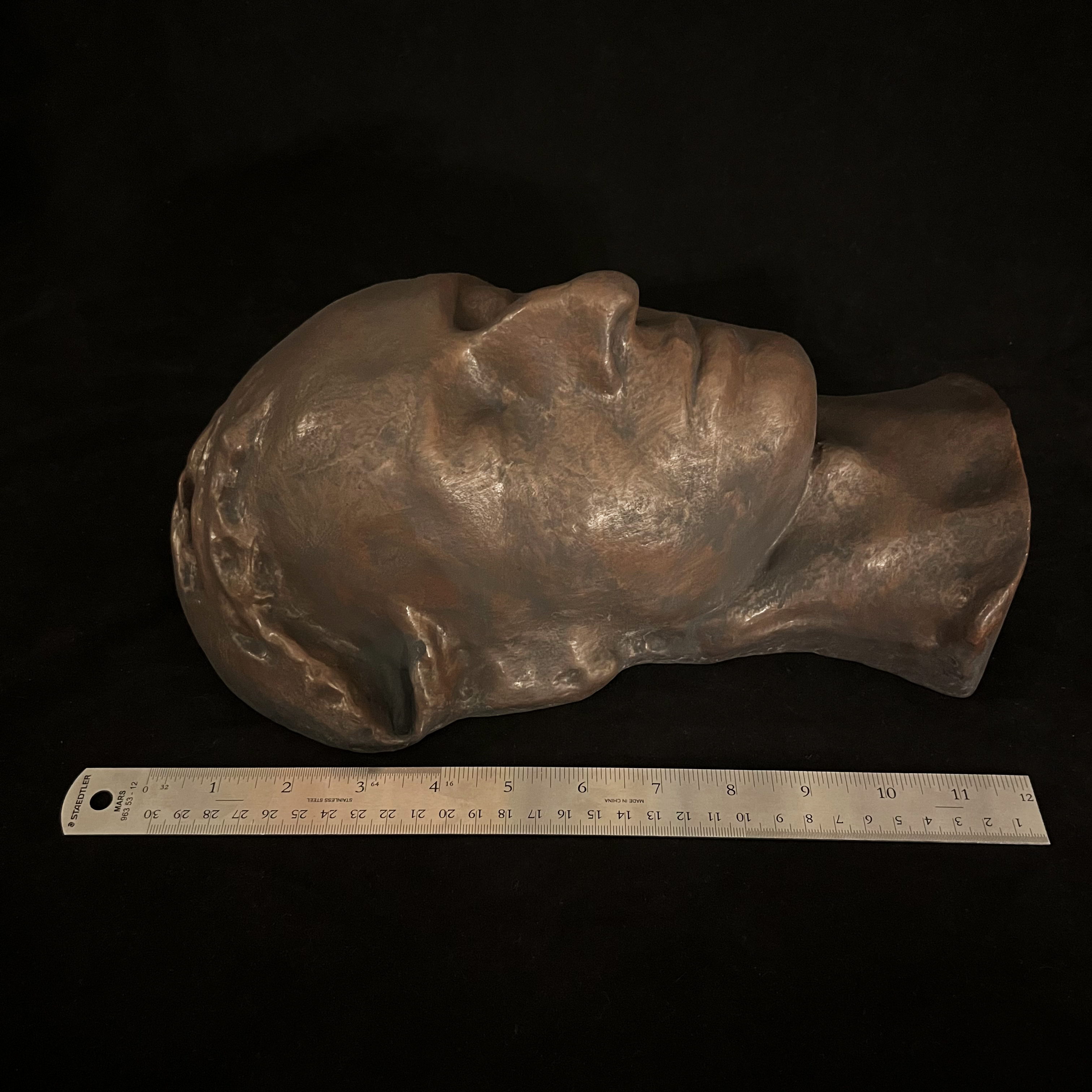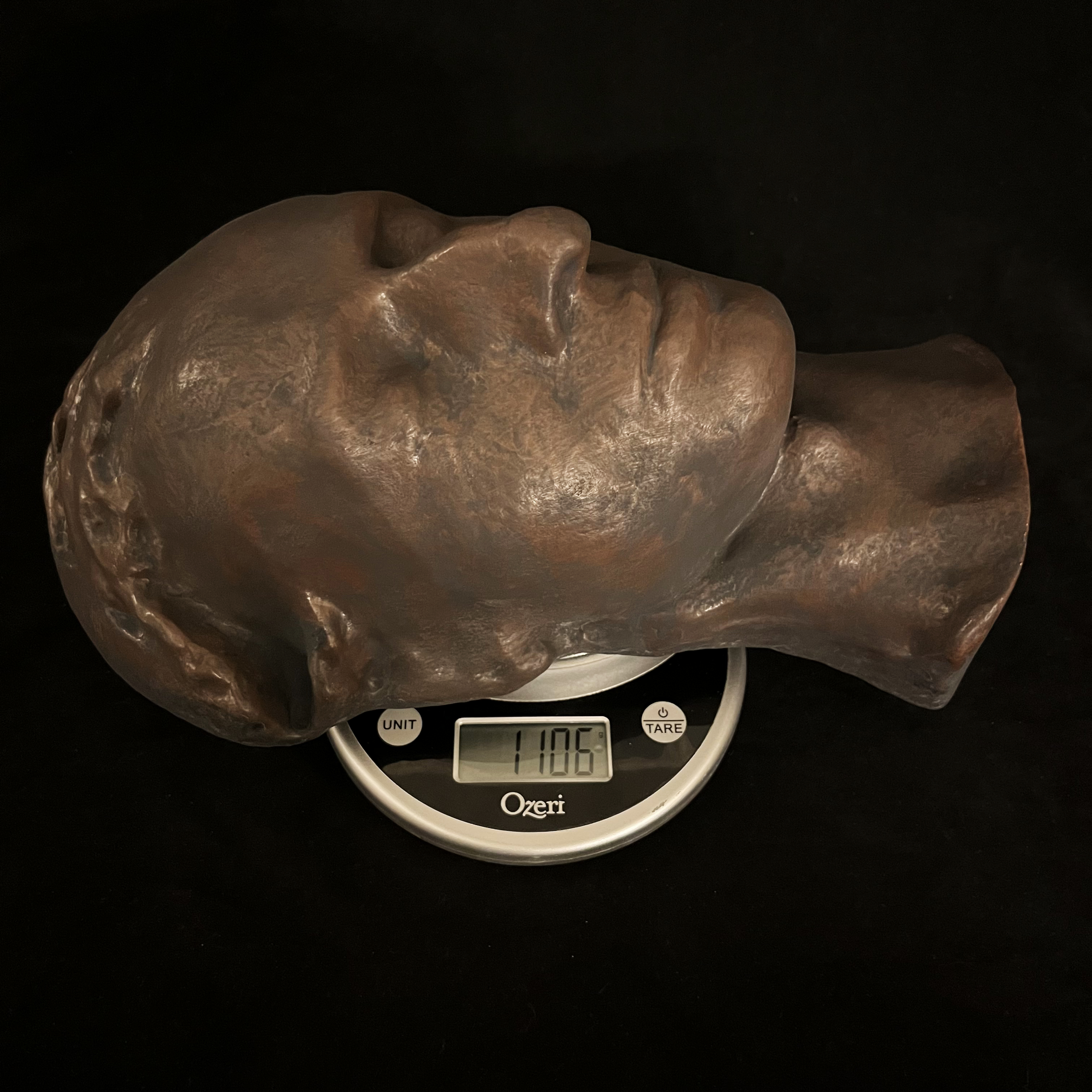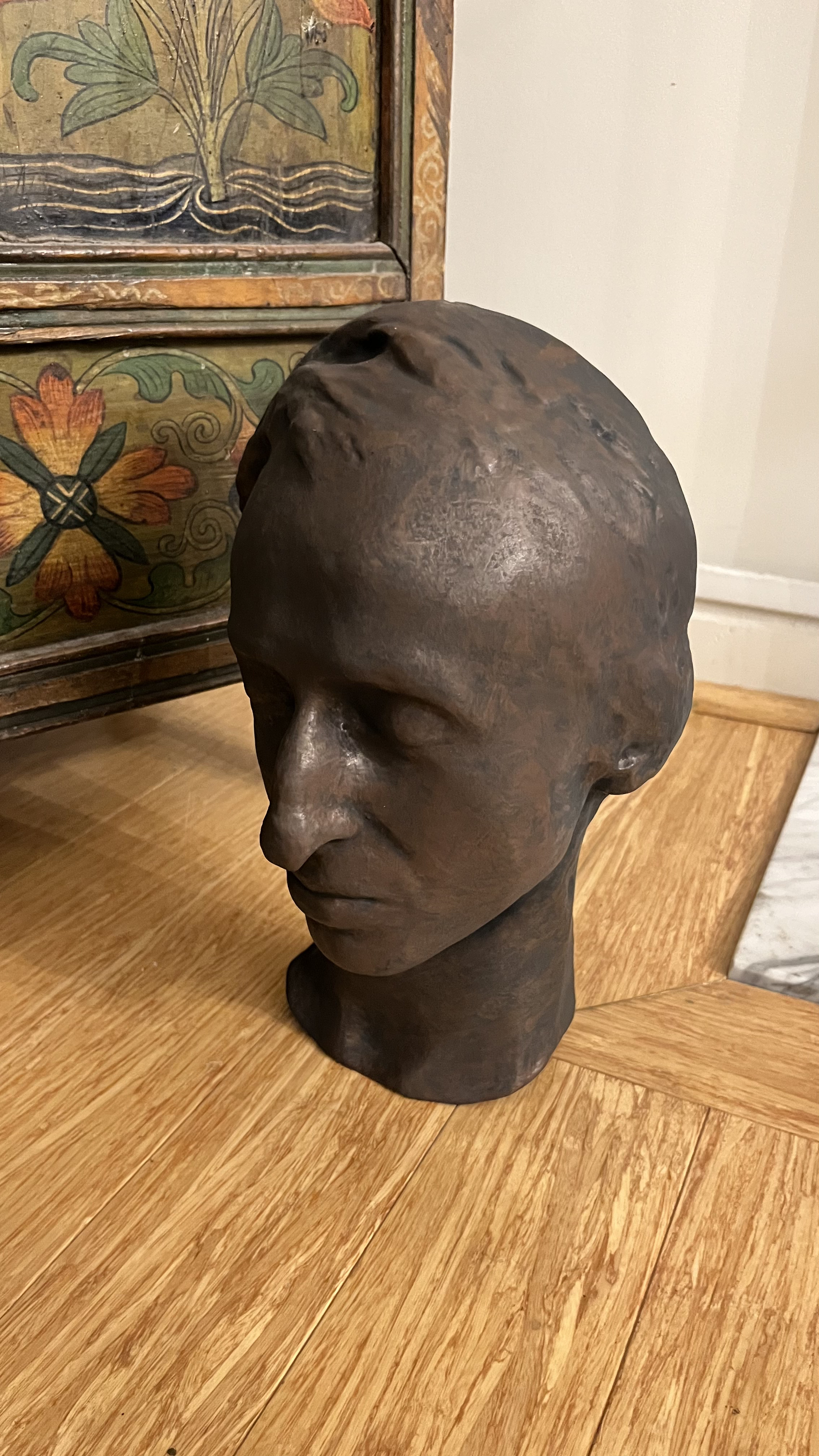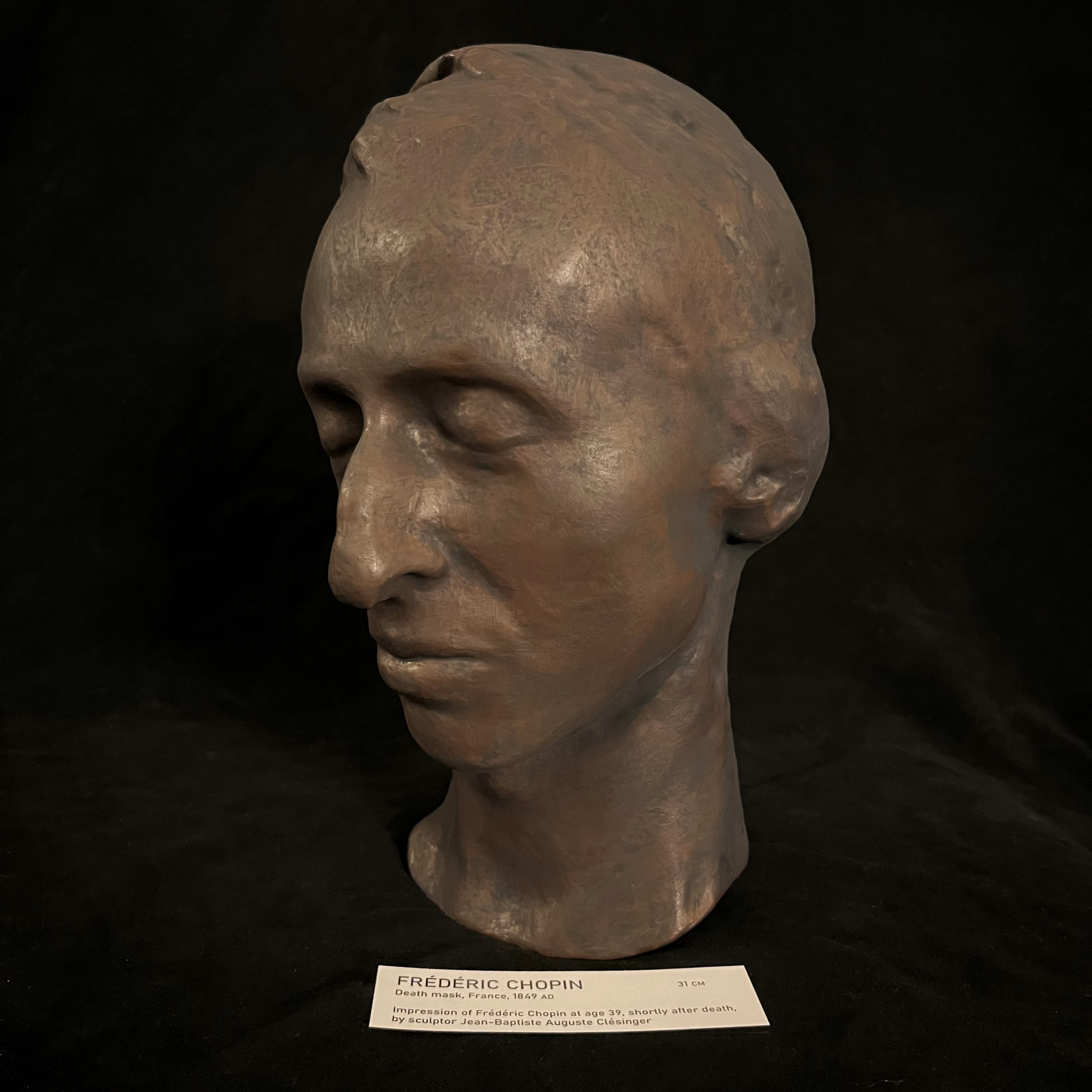
This is a life-size museum-grade replica of the 1849 death mask of Frédéric Chopin, taken from the composer’s face in Paris by the French sculptor Jean-Baptiste Auguste Clésinger in the hours after Chopin’s death.
Chopin died on October 17, 1849 at the age of thirty-nine, after a long illness widely believed to have been a form of pulmonary tuberculosis, surrounded by his closest friends in his apartment on the Place Vendôme. In mid-19th-century France, death masks were treated as documentary objects: a practical attempt to preserve a precise physical record at a moment when no photograph could reliably convey three-dimensional form and surface detail.
For Chopin, the urgency was heightened by the scarcity of dependable likenesses. Aside from a handful of daguerreotypes, lithographs, and idealized portraits, there was no equivalent sculptural record of his features prior to 1849. The mask therefore occupies a special place in Chopin’s posthumous image: it is the closest thing to a direct physical imprint of the composer’s face.
Jean-Baptiste Auguste Clésinger was summoned almost immediately after Chopin’s death. At the bedside he took casts of Chopin’s face and left hand, creating what became the principal sculptural record of the composer’s physiognomy.
Contemporary references and later museum catalogue descriptions indicate that Clésinger produced more than one facial mold, including a version he retained and another that was subtly idealized to soften signs of suffering. These casts later informed the white-marble funerary monument for Chopin’s grave at Père Lachaise, with the mask used as an anatomical guide for the head while the composition is framed by allegorical elements.
Authentic casts derived from Clésinger’s originals are preserved in major institutional collections and are often catalogued explicitly as copies “modelled on” or taken from the original work by Clésinger. Their continued presence in museum and conservatory collections is a signal of how this object is treated: not as a decorative portrait, but as a documentary link back to the Paris molds of 1849.
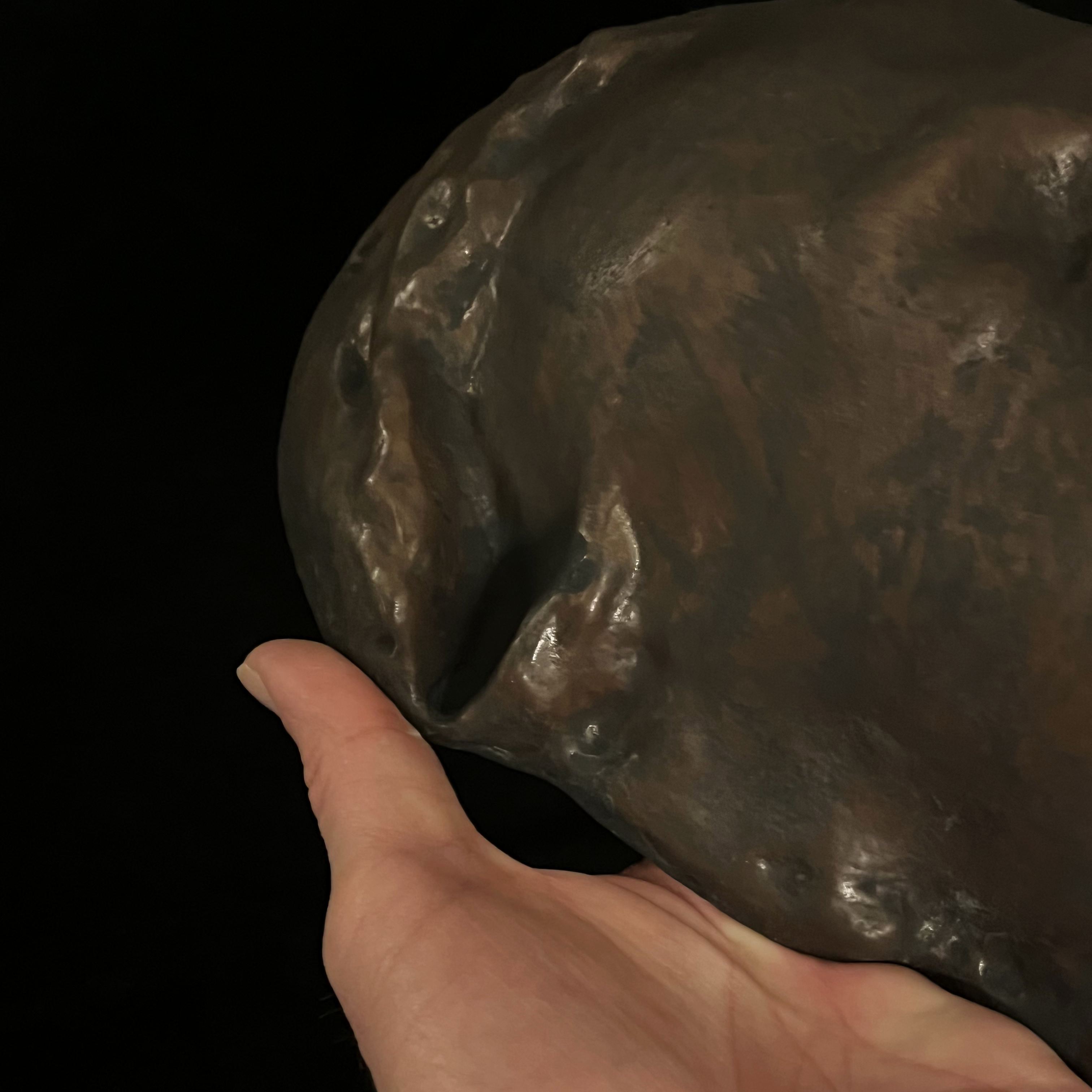
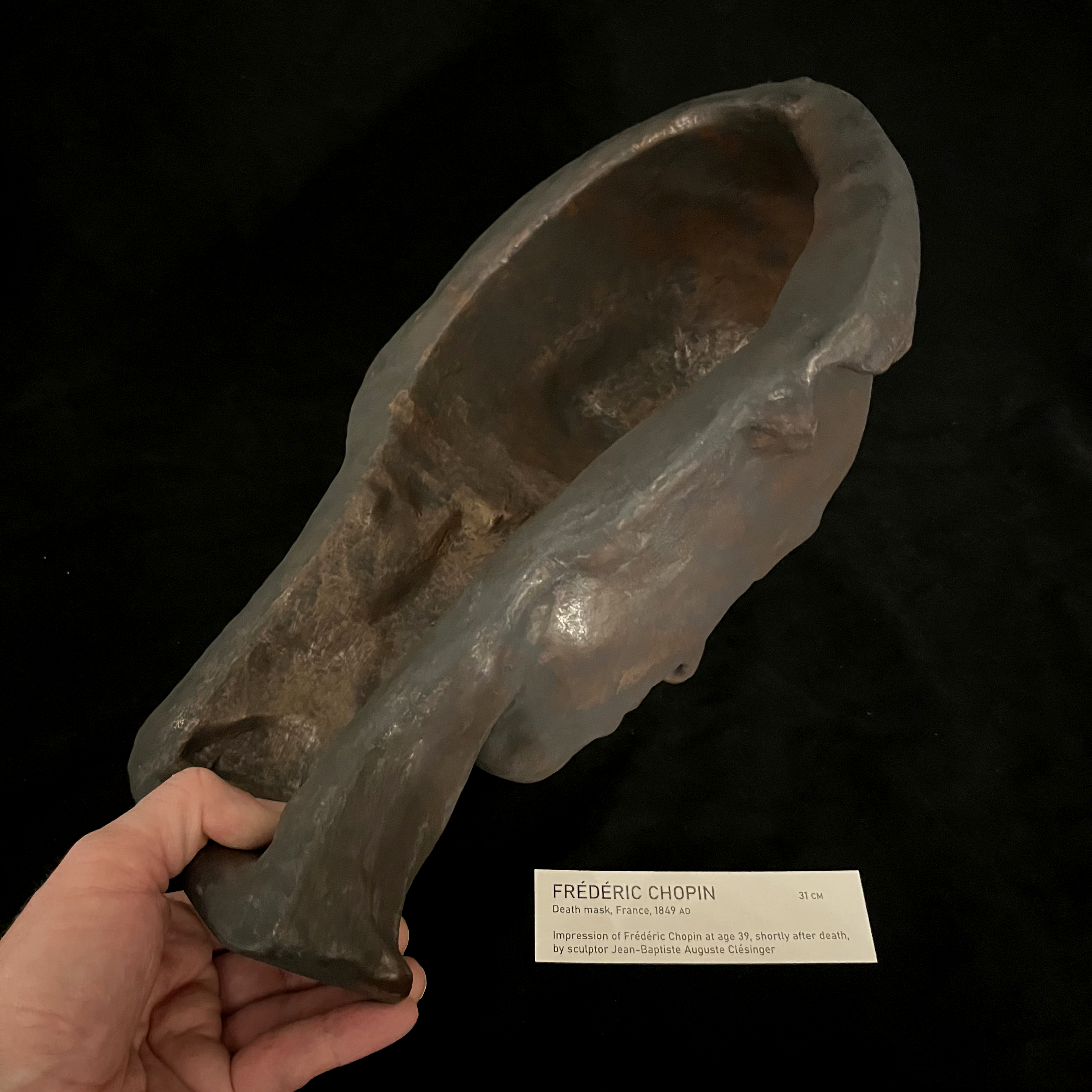
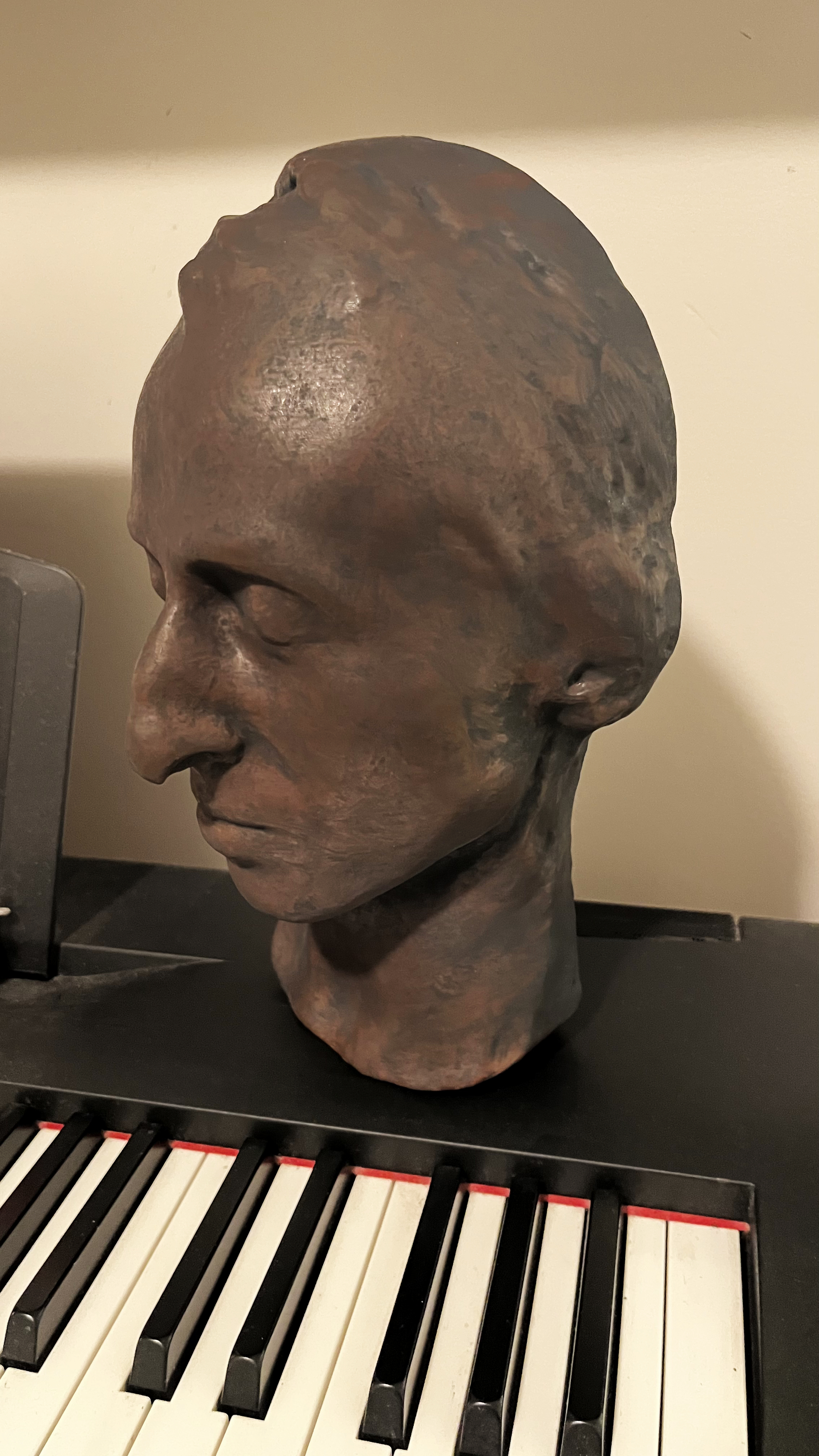
The flat back of the mask, an unusual characteristic for many death masks of the period, makes it suitable for display in three orientations, as shown in the photos: flat on its back, standing on its end, or hanging on a wall.
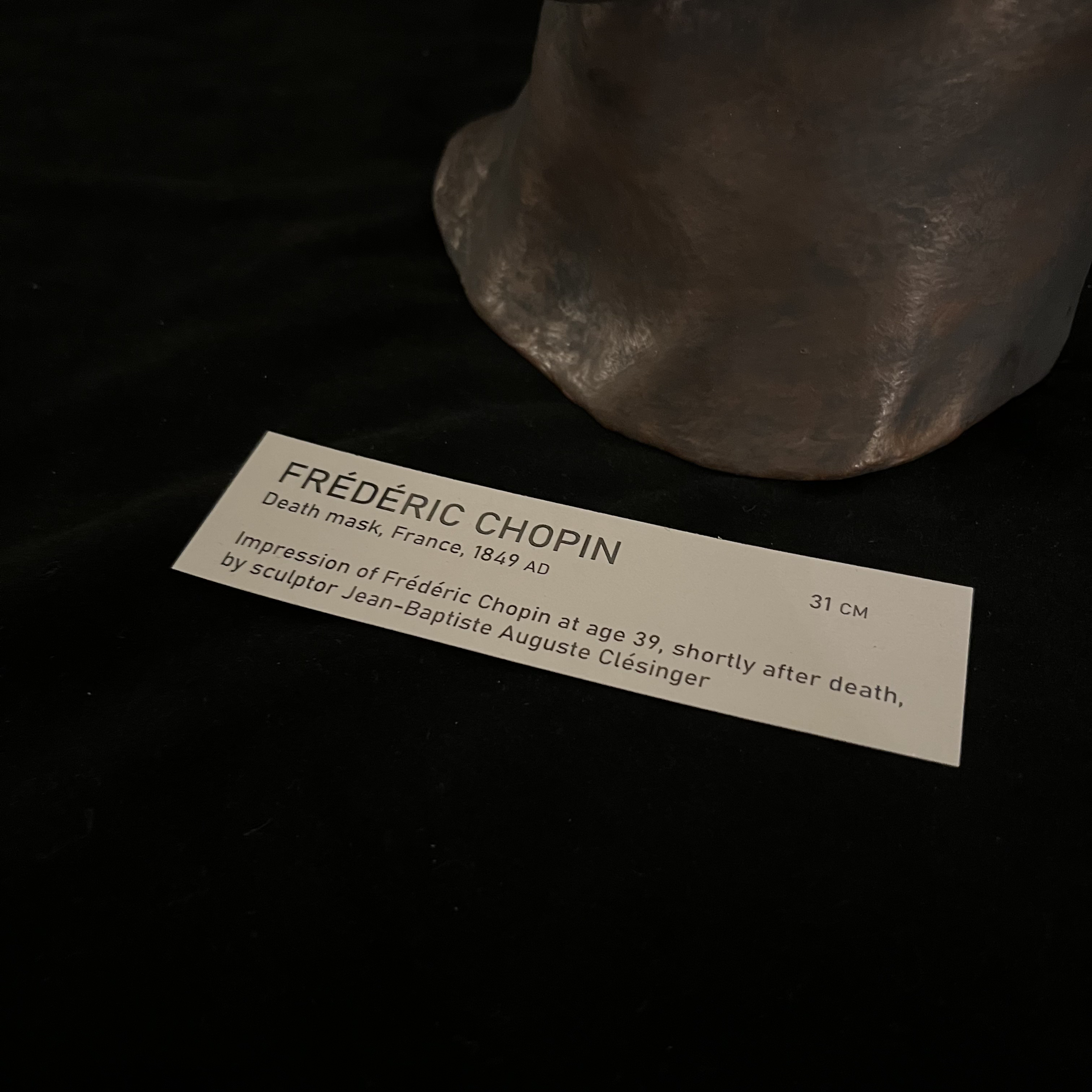
A museum display tag accompanies the piece and notes that the original mask was taken in Paris by Jean-Baptiste Auguste Clésinger shortly after the composer’s death on October 17, 1849.
Made in the USA.